Why Walnut? The Game-Changing Kitchen Upgrade
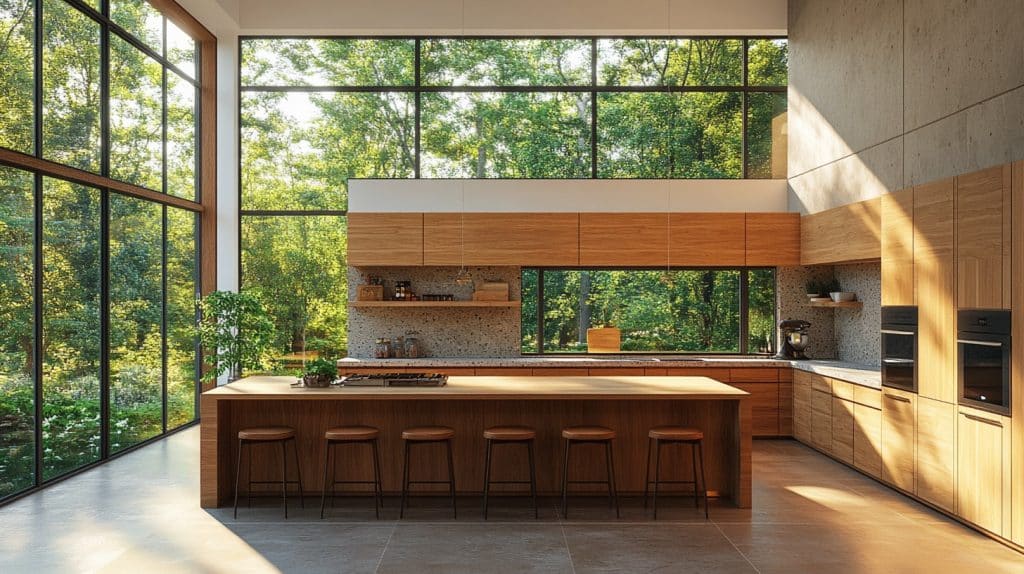
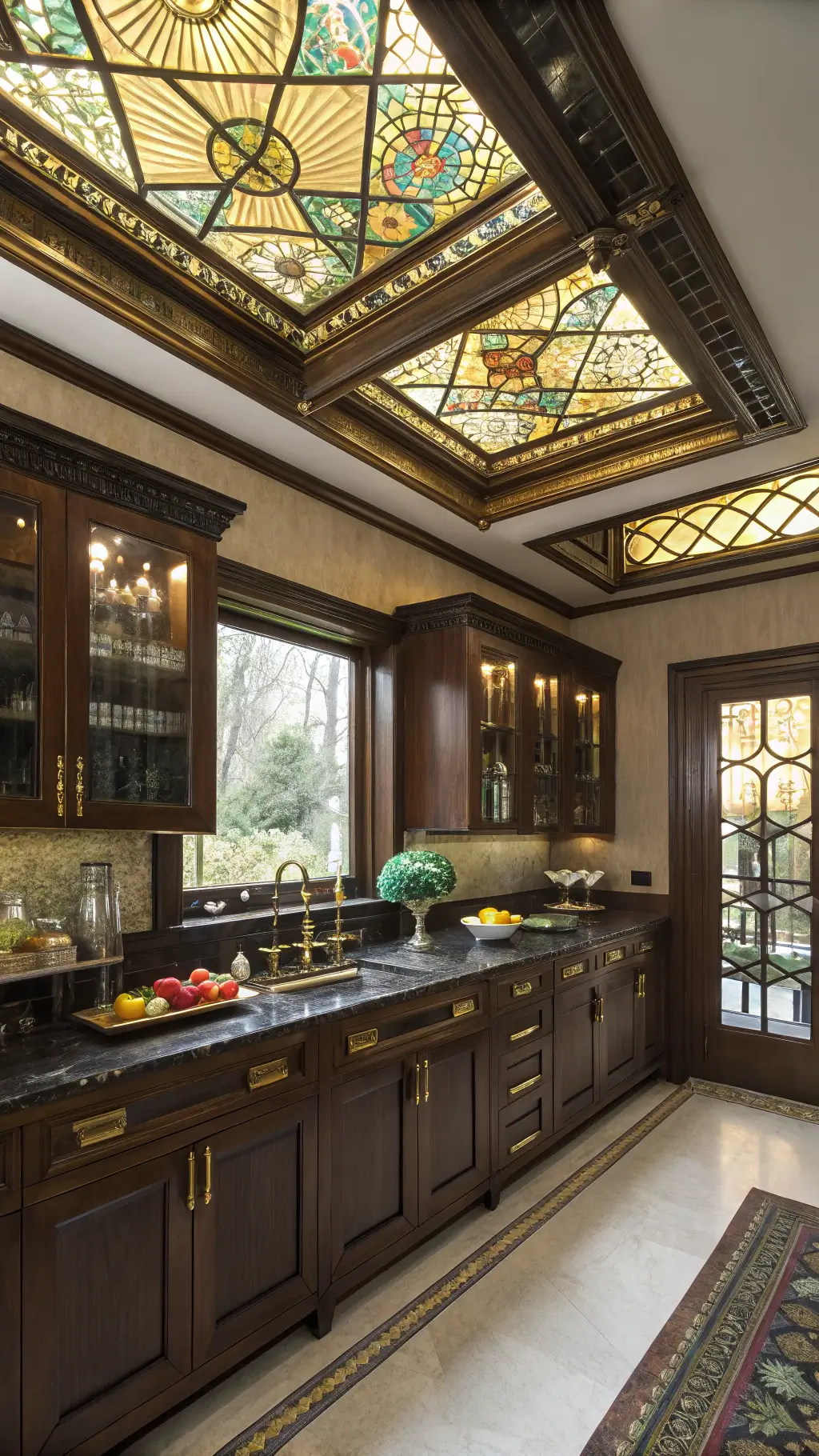
Imagine walking into a kitchen that immediately catches your eye. That’s the magic of walnut cabinets.
Why Walnut Stands Out:
- Rich, deep brown tones that never go out of style
- Unique grain patterns that tell a story
- Durability that laughs in the face of daily kitchen chaos
- Versatility that works with almost any design aesthetic
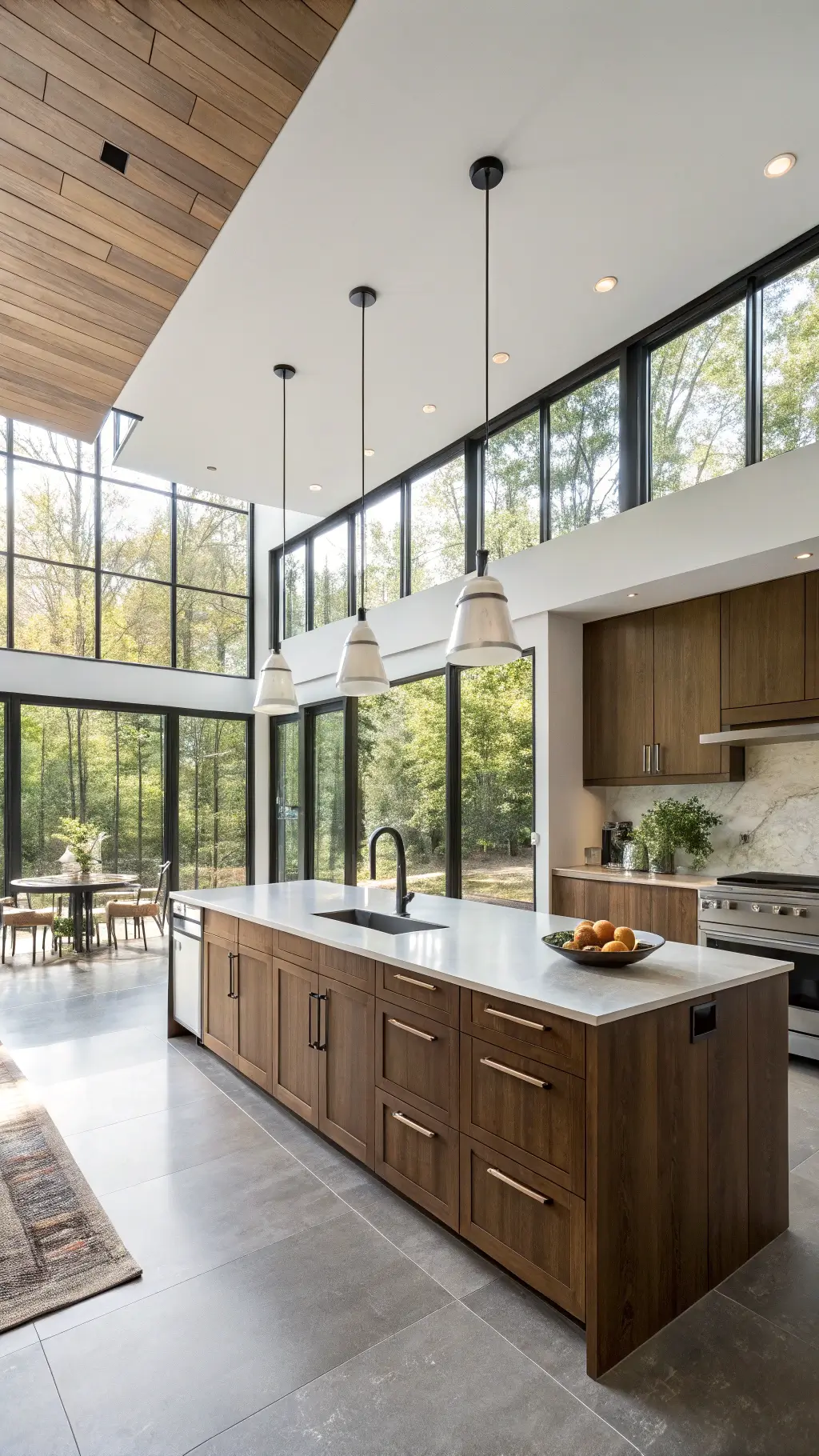
✎ Steal This Look
- Paint Color: Sherwin-Williams Accessible Beige SW 7036
- Furniture: walnut kitchen island with waterfall edge and brass foot rail
- Lighting: linear LED pendant with bronze finish over island
- Materials: honed Calacatta Viola marble, unlacquered brass hardware, hand-scraped white oak flooring
There’s something deeply satisfying about a kitchen that actually improves with age—walnut develops a patina that makes your space feel lived-in and loved from day one.
Understanding Walnut Cabinet Options
Not all walnut cabinets are created equal. Here’s the breakdown:
1. Solid Walnut Cabinets
- 100% pure walnut wood
- Most expensive option
- Highest quality and durability
- Bragging rights for authentic wood lovers
2. Walnut Veneer Cabinets
- Thin walnut layer over engineered wood
- More budget-friendly
- Still delivers that stunning walnut look
- Perfect for design-conscious homeowners on a budget
3. Walnut Laminate Cabinets
- Most affordable option
- Consistent appearance
- Great for tight budgets
- Mimics the walnut aesthetic without the hefty price tag
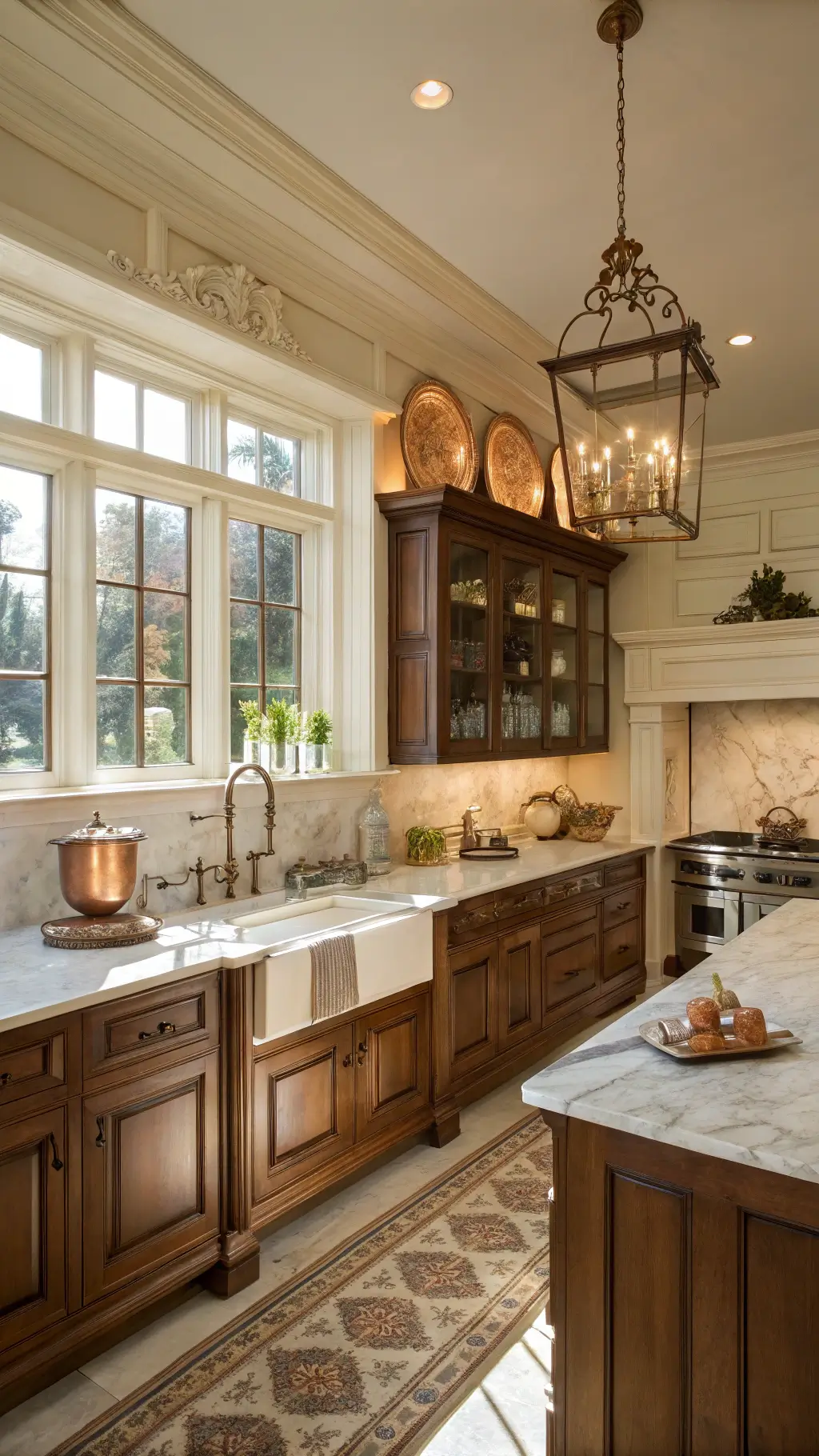
🎨 Steal This Look
- Paint Color: Benjamin Moore White Dove OC-17
- Furniture: floating walnut vanity with vessel sink
- Lighting: matte black linear pendant over island
- Materials: quartzite waterfall countertop, brushed brass hardware, white oak flooring
Walnut kitchens feel like a warm embrace when you walk in—they’re the kind of space where morning coffee becomes a ritual and dinner parties stretch late into the evening.
Design Possibilities: More Versatile Than You Think
Walnut isn’t just for one type of kitchen. These cabinets can transform:
- Modern minimalist spaces
- Warm traditional kitchens
- Sleek contemporary designs
- Rustic farmhouse aesthetics
Pro Styling Tips:
- Pair with white countertops for dramatic contrast
- Use matte black hardware for a modern edge
- Add under-cabinet lighting to highlight walnut’s natural beauty
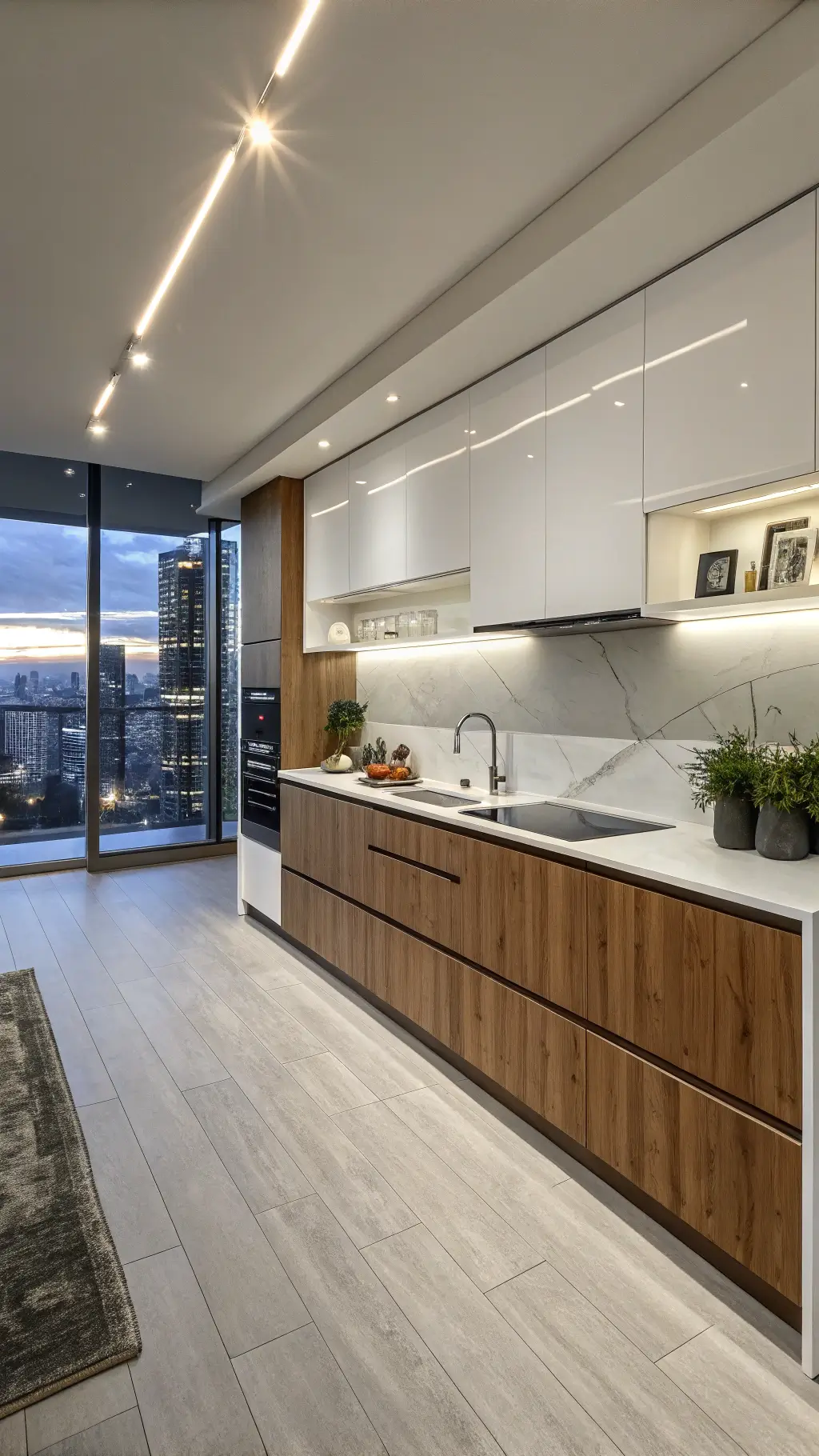
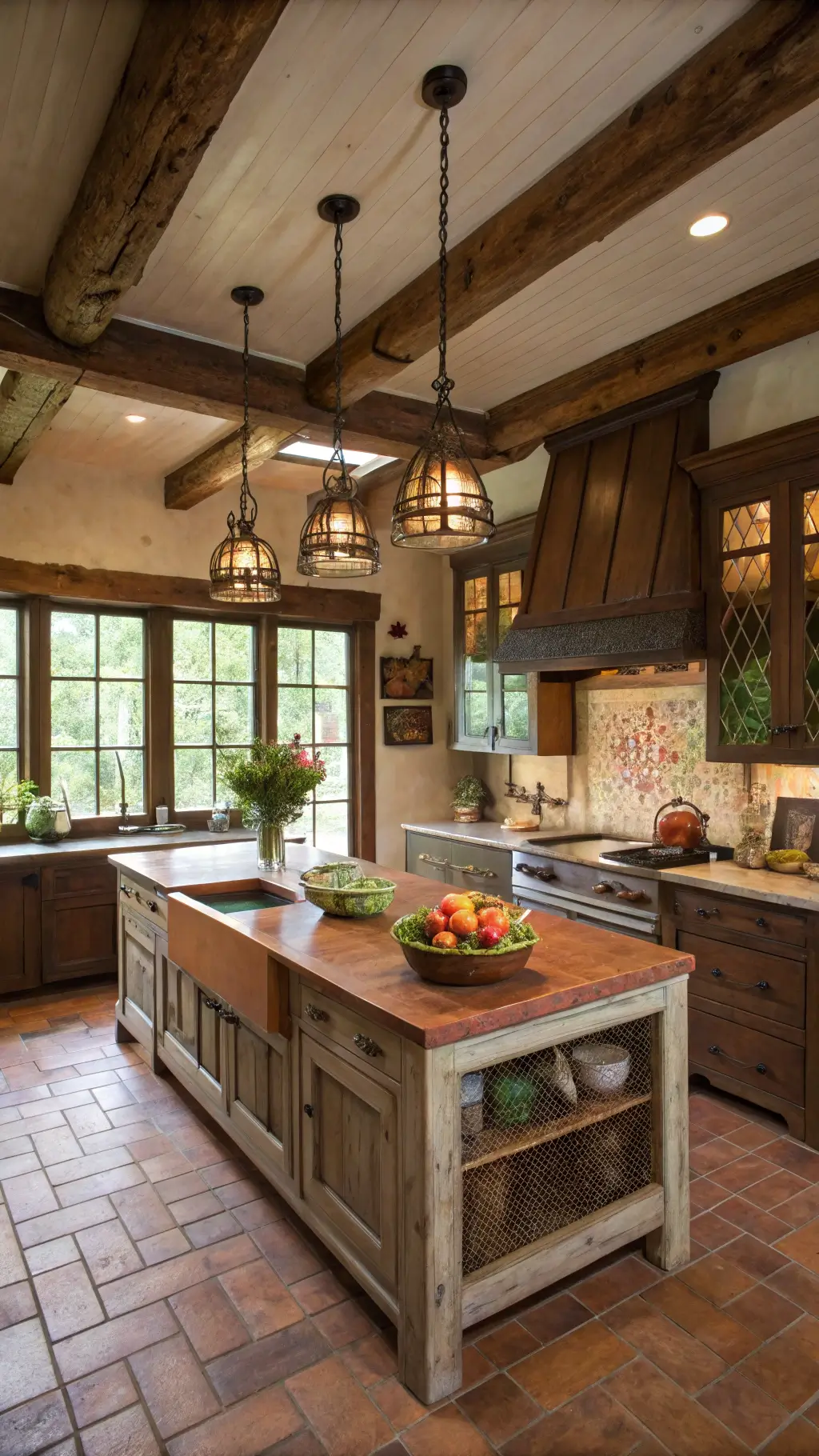
★ Steal This Look
- Paint Color: Farrow & Ball Skimming Stone 241
- Furniture: a walnut-stained oak dining table with tapered legs
- Lighting: schoolhouse glass pendant with aged brass canopy
- Materials: honed Carrara marble, unlacquered brass, raw linen, reclaimed barn wood open shelving
I’ve watched homeowners hesitate over walnut thinking it reads too heavy, but in a north-facing kitchen I recently sourced for, that same depth became the room’s anchor against gray winter light—suddenly the cabinets felt like the only thing holding the space together.
Practical Considerations
Budget Ranges
- RTA (Ready to Assemble) Cabinets: $40 – $300 per unit
- Semi-Custom Options: $200 – $1,000 per linear foot
- Custom High-End Walnut Cabinets: $500 – $1,500+ per linear foot
Maintenance Simplified
- Dust regularly
- Wipe spills immediately
- Use gentle, wood-specific cleaners
- Avoid harsh chemicals
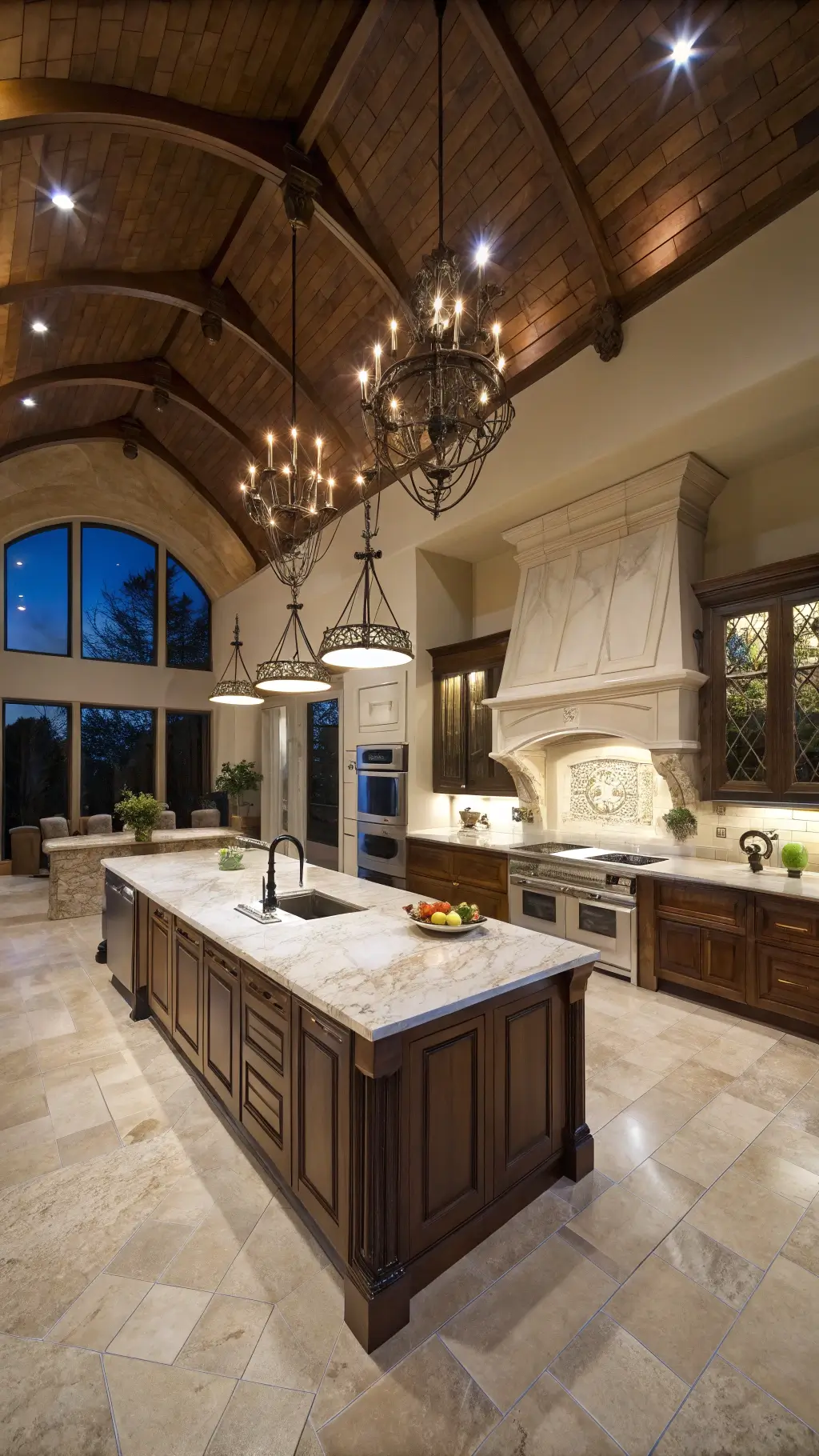
✎ Steal This Look
- Paint Color: Behr Swiss Coffee 12
- Furniture: floating walnut shelf with integrated wine rack
- Lighting: linear LED under-cabinet light bar in warm 2700K
- Materials: brushed brass hardware, honed Calacatta marble backsplash, natural linen window treatments
Walnut cabinets reward the intentional homeowner—this is cabinetry you’ll live with for decades, so the upfront investment in quality construction pays dividends in both daily pleasure and resale value.
Common Configurations to Consider
- Base cabinets
- Wall cabinets
- Corner units
- Drawer bases
- Special purpose cabinets (like appliance panels)
🖼 Steal This Look
- Paint Color: Valspar Swiss Coffee 7002-16
- Furniture: A walnut kitchen island with waterfall edge and integrated seating overhang
- Lighting: Recessed linear LED under-cabinet lighting with warm 2700K output
- Materials: Bookmatched walnut veneer, brushed brass hardware, leathered quartzite countertops, and ribbed glass inserts for upper cabinets
There’s something deeply satisfying about opening a solid walnut drawer base—the weight, the smooth glide, the way the grain patterns greet you every morning. These configurations aren’t just storage decisions; they’re the daily rituals that make a kitchen feel genuinely yours.
Care and Longevity
Walnut is naturally durable, but it’s not indestructible. Here’s how to keep your cabinets looking pristine:
Maintenance Checklist:
- Clean with soft, damp cloth
- Use wood conditioner 1-2 times per year
- Avoid direct sunlight exposure
- Address scratches quickly with wood touch-up kits
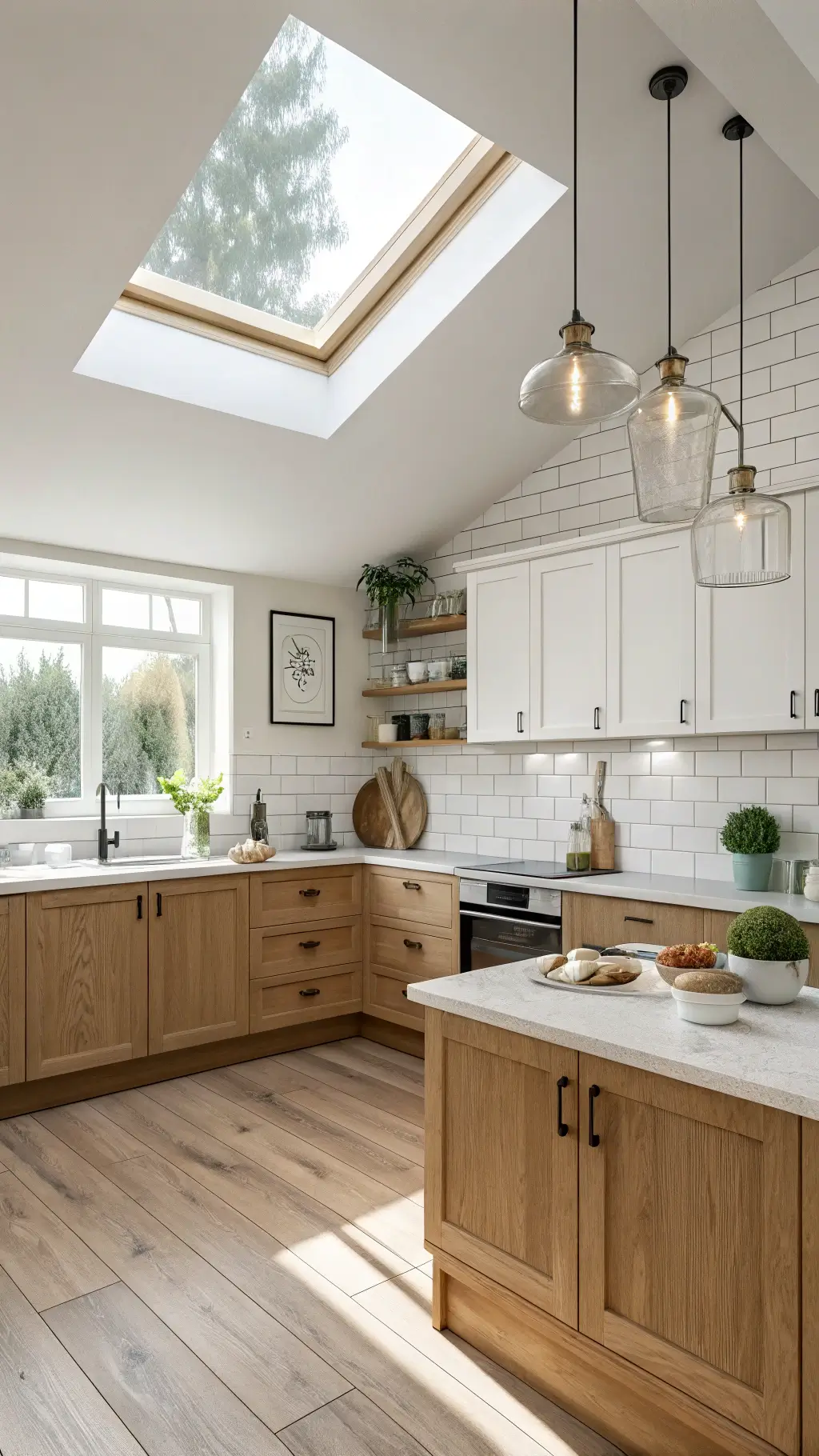
★ Steal This Look
- Paint Color: PPG Timeless Ivory PPG1075-1
- Furniture: walnut butcher block kitchen island with turned legs
- Lighting: brass pendant lights with seeded glass shades
- Materials: oiled walnut, honed Carrara marble, aged brass hardware, linen textiles
Walnut cabinets age like a well-loved leather sofa—they develop character through use, but only if you’re willing to invest 20 minutes twice a year in proper conditioning.
Making the Right Choice
Before diving in, ask yourself:
- What’s my overall kitchen design?
- What’s my budget?
- How much maintenance am I willing to do?
Final Thoughts
Walnut kitchen cabinets aren’t just a purchase – they’re an investment in your home’s beauty and functionality. Whether you’re a design enthusiast or someone seeking quality, walnut delivers on all fronts.
Pro Tip: Always get samples and view cabinets in person. Wood can look different in various lighting conditions.
Your Next Steps
- Measure your kitchen space
- Determine your budget
- Explore different walnut cabinet options
- Consult with a kitchen design professional
Walnut cabinets aren’t just furniture – they’re a lifestyle choice that says something about you.