Wabi-sabi, a Japanese philosophy that celebrates imperfection, simplicity, and the beauty of natural aging, offers a transformative approach to home design. In this guide, we’ll explore 20 wabi sabi apartment ideas to infuse your living space with the serene, authentic essence of wabi-sabi. From embracing raw textures to incorporating aged materials, these design strategies will help you create an environment that honors the charm of life’s natural imperfections and tells a unique, personal story.
1. Celebrating Textural Flaws
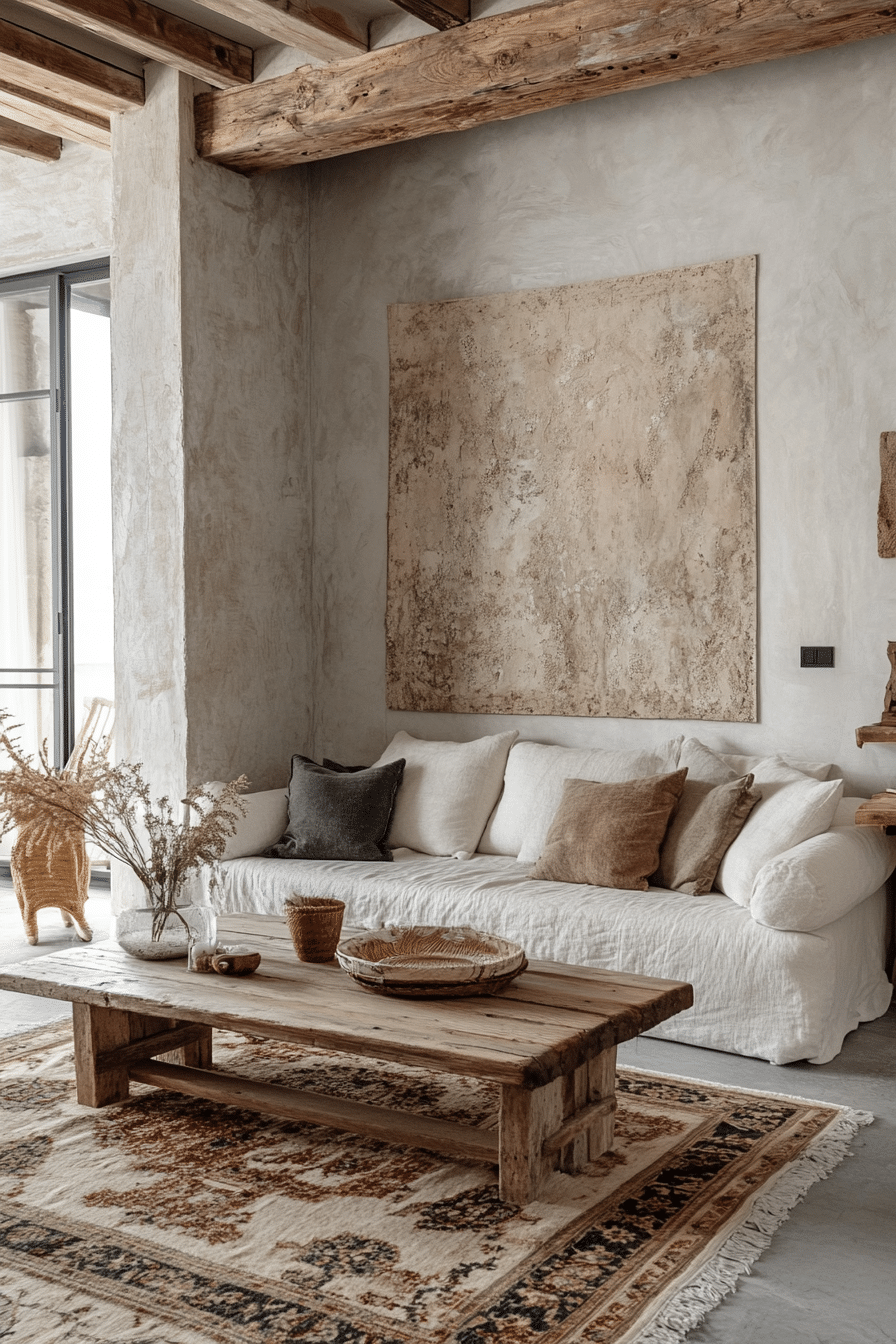
Embrace the charm of raw, unpolished textures like rough wood or linen in your home. These materials highlight the beauty of imperfection, central to wabi-sabi. They add authenticity and character to your living space.
★ Steal This Look
- Paint Color: Sherwin-Williams Accessible Beige SW 7036
- Furniture: low-profile white linen slipcovered sectional sofa with deep seats and relaxed cushions
- Lighting: recessed or track lighting to preserve clean ceiling lines and highlight exposed beams
- Materials: reclaimed rough-hewn wood, hand-troweled lime plaster, vintage wool rug with natural patina, woven rattan, dried botanicals
This room feels like a deep exhale—it’s the kind of space that forgives a coffee ring on the table because the table itself has already lived a hundred years.
2. Rustic Wood Furniture Charm
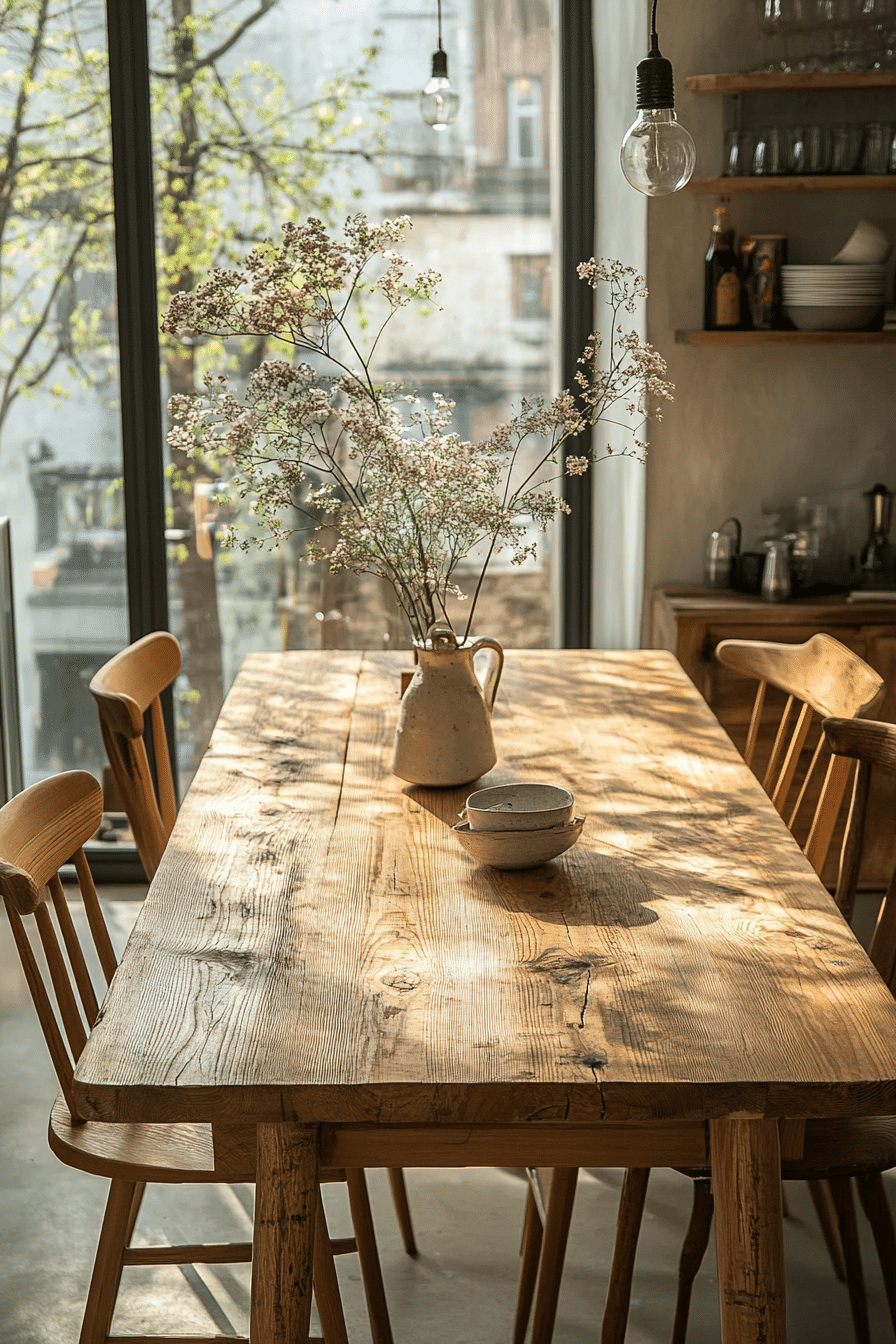
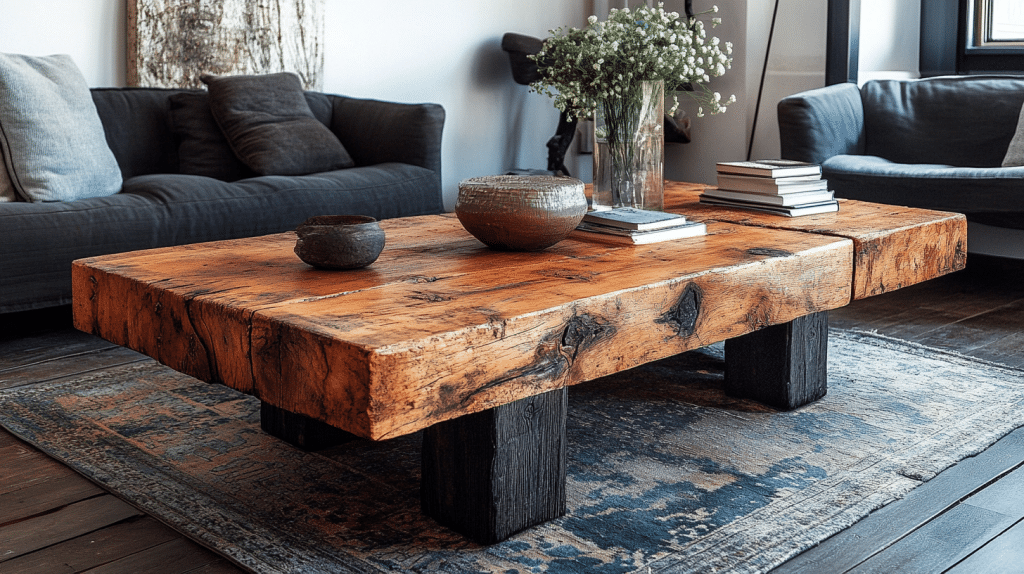
Furnish your apartment with pieces showcasing natural wood’s knots and grains. This choice brings a warm, grounding vibe that resonates with wabi-sabi simplicity. Each piece tells its own story through its natural imperfections.
🌟 Steal This Look
- Paint Color: Benjamin Moore Pashmina AF-100
- Furniture: live-edge reclaimed oak dining table with visible knots and natural edge
- Lighting: exposed Edison bulb pendant lights with black cloth cord
- Materials: raw reclaimed wood, hand-thrown ceramic, polished concrete floors, clear glass
This is the kind of table where coffee stains become part of the patina and every scratch marks another shared meal—it’s furniture that asks you to relax and actually live in your space.
3. Artisan Ceramic Touches
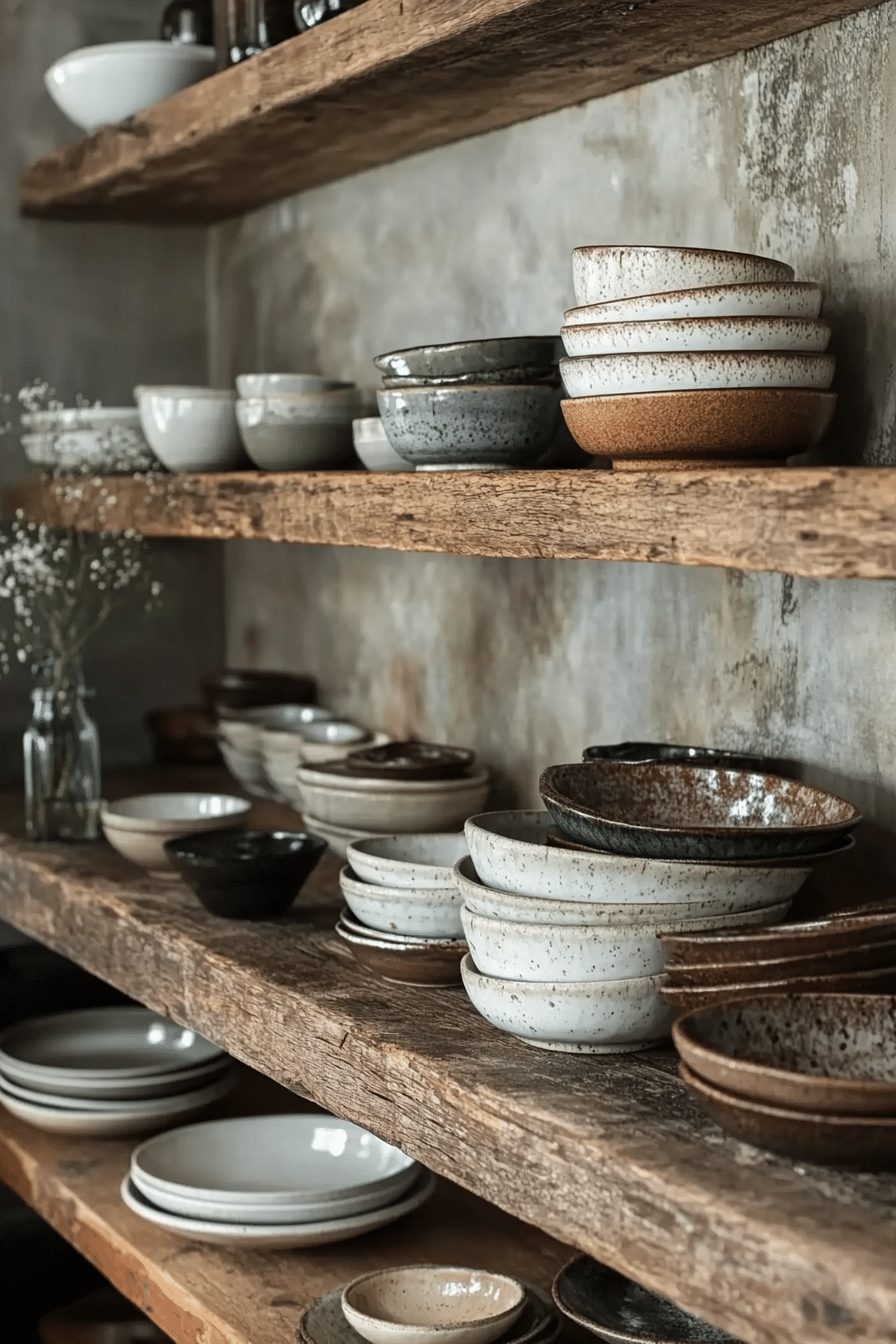
Add personality with ceramics that bear the marks of handcrafting, like uneven shapes and textures. These items embody the essence of wabi-sabi by valuing human imperfection. They’re perfect for adding a personal touch to your decor.
🌟 Steal This Look
- Paint Color: Farrow & Ball Drop Cloth No. 283
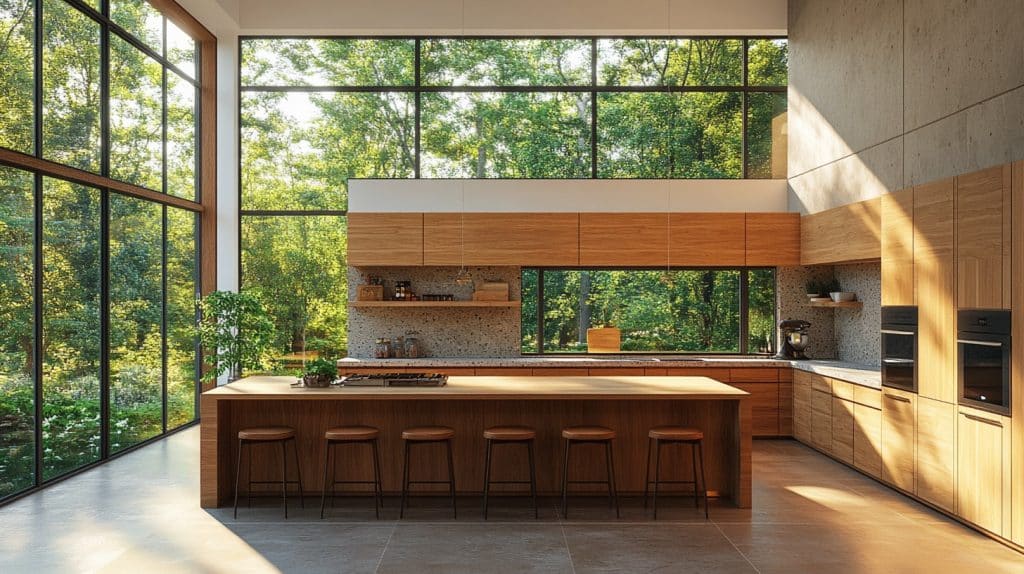
- Furniture: thick reclaimed barn wood floating shelves with live edges and visible grain
- Lighting: warm LED under-shelf strip lighting or a single vintage brass pendant
- Materials: rough-hewn oak, unglazed terracotta, speckled stoneware, oxidized metal accents
This is the kitchen that slows your morning down—you’ll reach for the chipped bowl on purpose, running your thumb over its glaze drip while the coffee brews.
4. Earthy Tones for Serenity
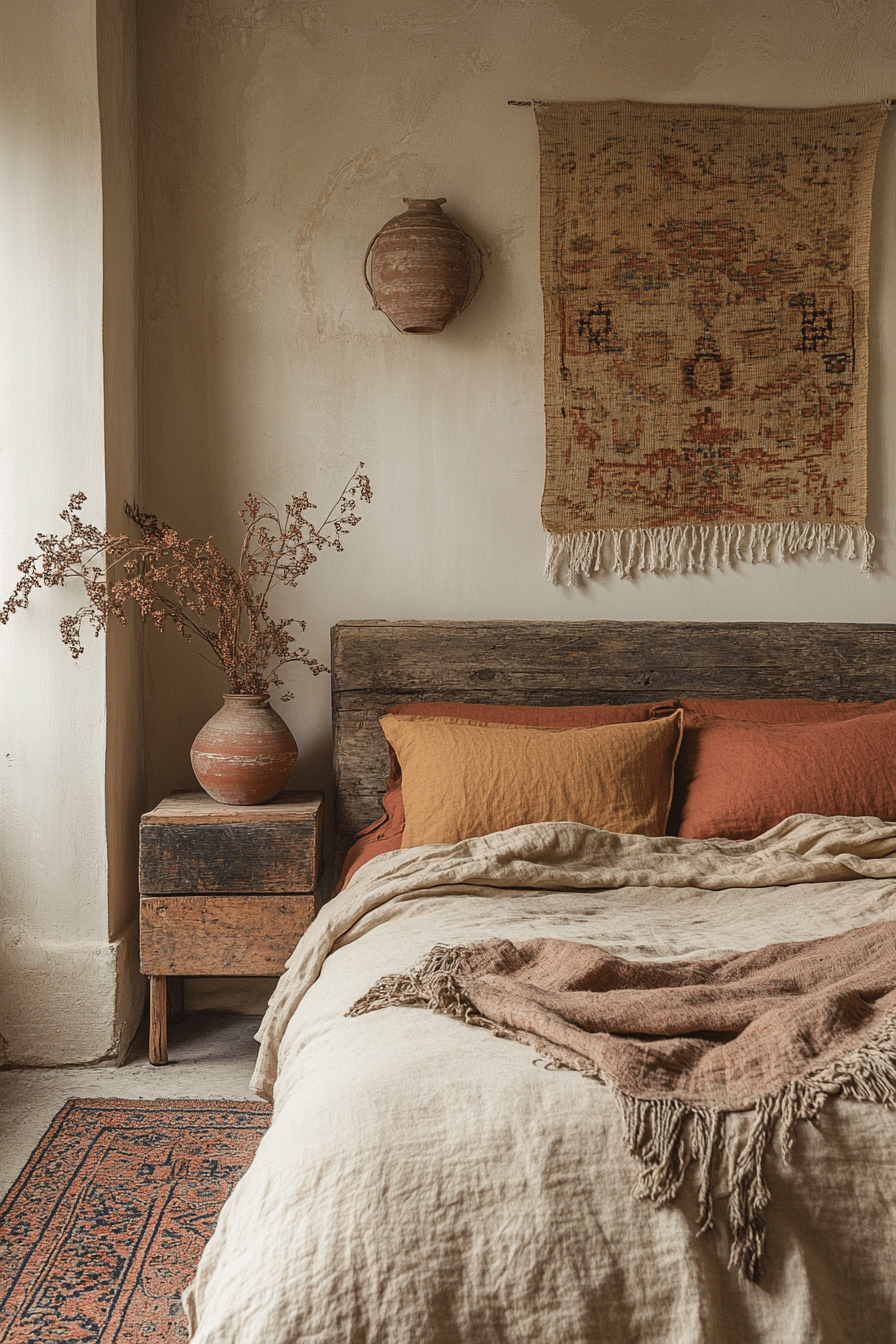
Paint your walls or choose decor in muted, earthy colors to create a calming environment. These tones connect you to nature and simplicity, key wabi-sabi elements. They help in crafting a peaceful, grounded apartment.
★ Steal This Look
- Paint Color: Behr Swiss Coffee 12
- Furniture: reclaimed wood platform bed with live-edge headboard, mismatched antique wood nightstand with visible dovetail joints
- Lighting: skip overhead fixtures entirely—rely on morning light through sheer linen curtains and add a single beeswax pillar candle in a terracotta dish for evening
- Materials: hand-troweled lime plaster walls, raw linen bedding with slubbed texture, vintage wool kilim with worn pile, unglazed terracotta vessels
This is the bedroom you sink into after a long week—the kind of space that forgives dust and celebrates the dent in your grandmother’s vase.
5. Natural Linen Comfort
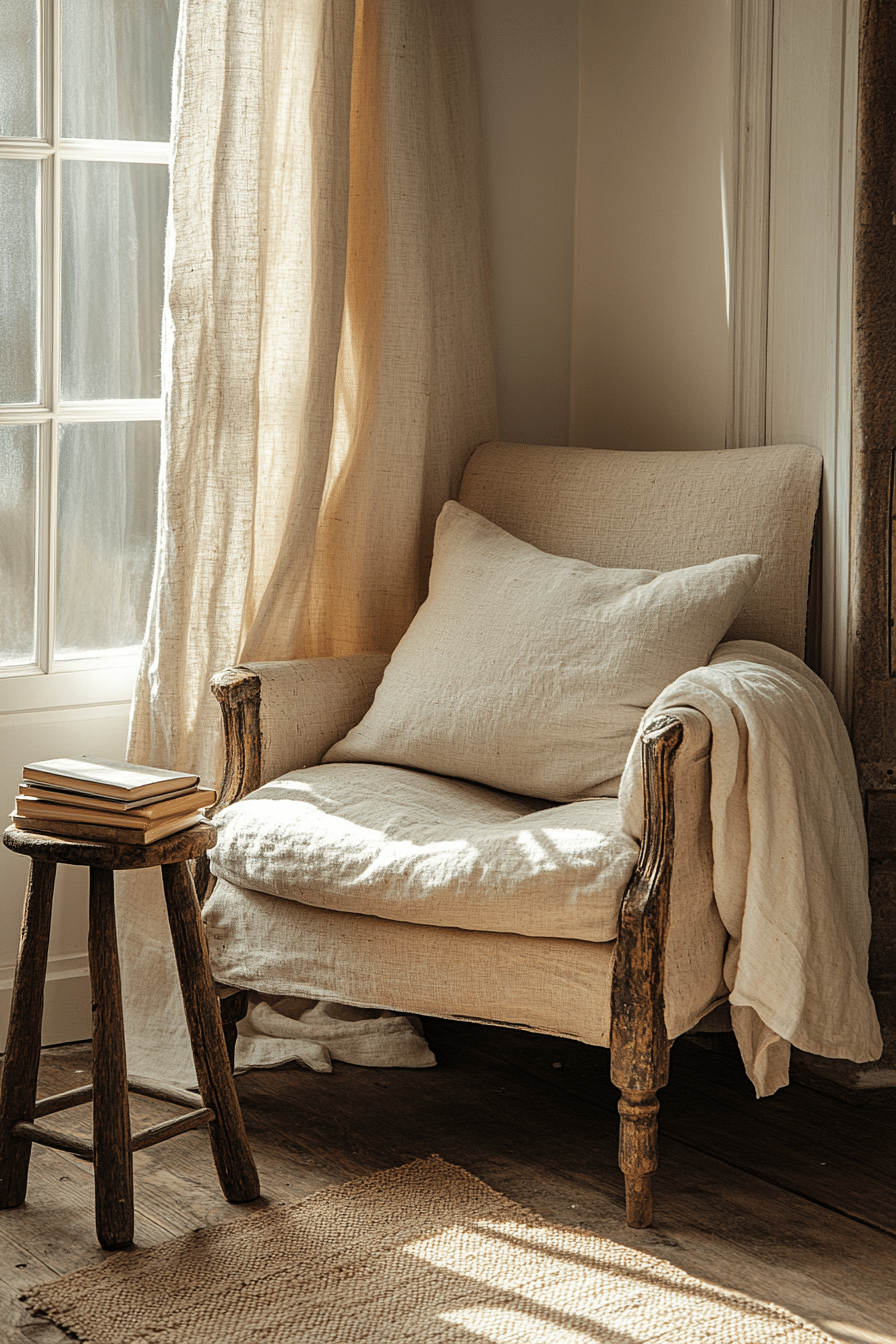
Adorn your space with organic linen showing natural creases and textures. This fabric promotes comfort and celebrates the beauty of simplicity over perfection. It’s ideal for a relaxed, wabi-sabi inspired living area.
★ Steal This Look
- Paint Color: Valspar Cream in My Coffee 7003-6
- Furniture: French provincial bergère armchair with distressed wooden frame and natural linen slipcover
- Lighting: Sheer linen curtain panels to filter natural daylight—no artificial fixture needed
- Materials: Aged oak, raw Belgian linen, handwoven jute, unbleached cotton gauze
This corner whispers slow mornings with coffee and dog-eared pages—it’s permission to do absolutely nothing beautifully.
6. Character-Filled Minimalism
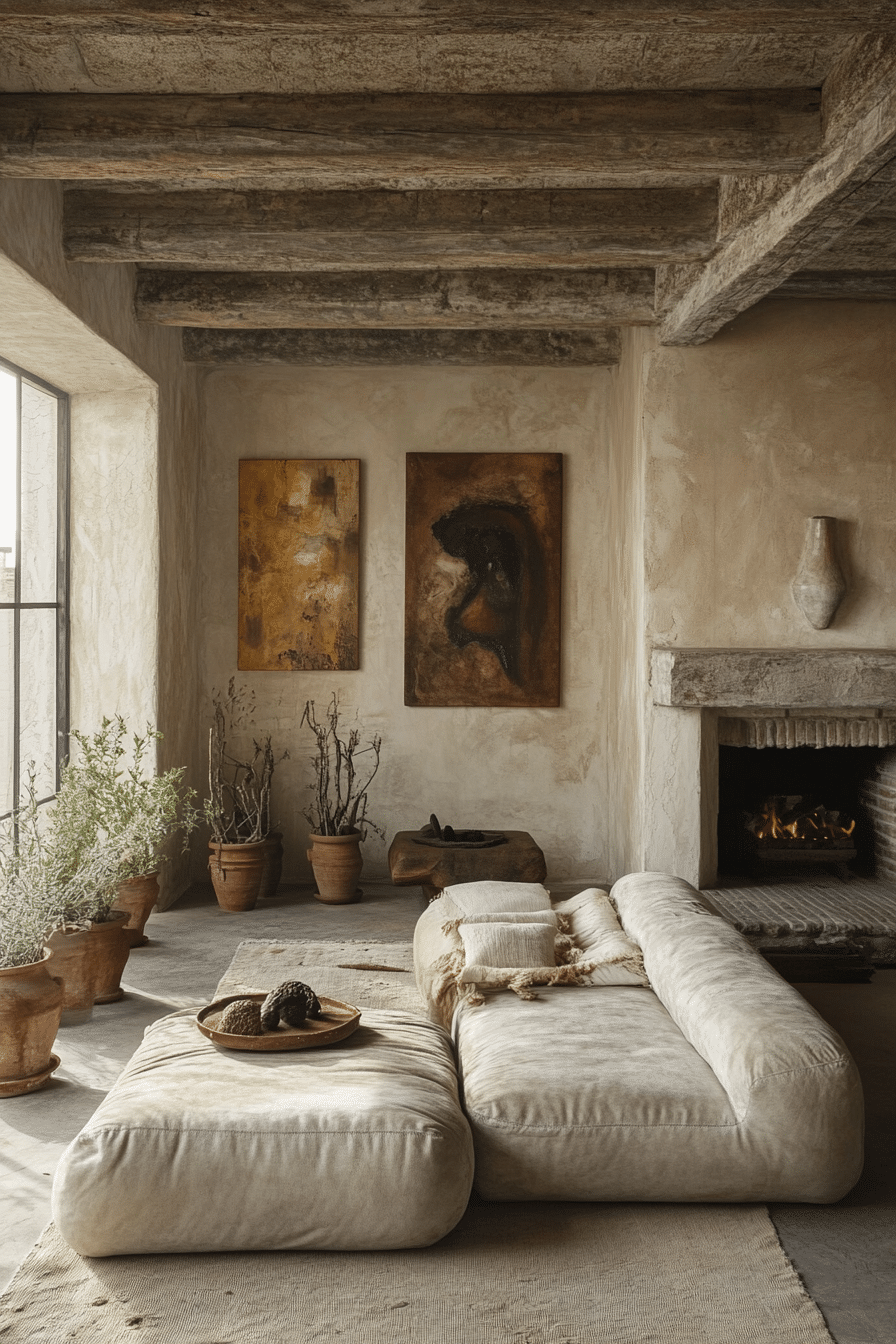
Create a minimalist layout but fill it with items that have history, like an old bench or vintage lamp. This approach adds depth and a narrative to your space, all while keeping it simple. It’s the perfect blend of wabi-sabi and minimalism.
🎨 Steal This Look
- Paint Color: PPG Weathered Limestone PPG1025-3
- Furniture: low-profile modular sectional sofa in natural linen canvas
- Lighting: steel-framed industrial window as primary light source with fireplace ambient glow
- Materials: lime plaster walls, weathered oak ceiling beams, terracotta pottery, natural fiber rugs, raw stone
This living room feels like a slow exhale, the kind of space that forgives dust and celebrates the dent in your coffee table from years of actual living.
7. Art of Asymmetry
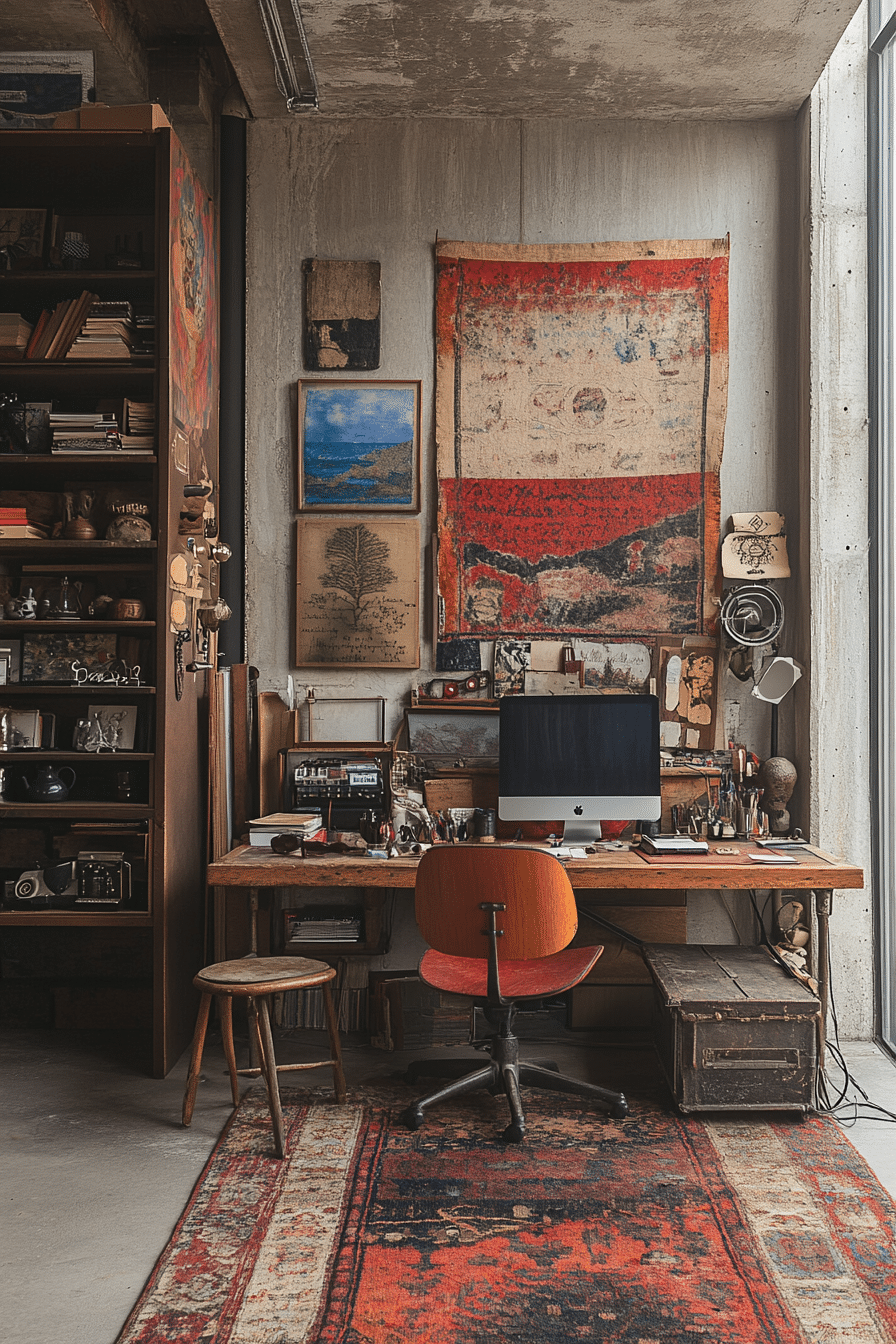
Adorn your walls with art that’s asymmetrical or abstract, embracing the wabi-sabi appreciation for imperfection. Such displays encourage a unique, non-conformist aesthetic. They can transform your space into a gallery of beauty in imperfection.
💡 Steal This Look
- Paint Color: Dunn-Edwards Weathered Stone DE6210
- Furniture: Reclaimed wood plank desk with live edge, paired with a vintage mid-century swivel task chair in burnt orange wool upholstery
- Lighting: Skip overhead fixtures entirely—position desk perpendicular to largest window for natural task lighting, supplement with a brass articulating architect’s lamp
- Materials: Raw concrete walls with intentional patina, hand-knotted Persian rugs with worn pile, oxidized metal hardware, unpolished walnut shelving
This is the workspace of someone who actually makes things—every scratch on that desk tells a story, and the concrete shell feels like a protective cave for creative chaos.
8. Timeless Antique Accents
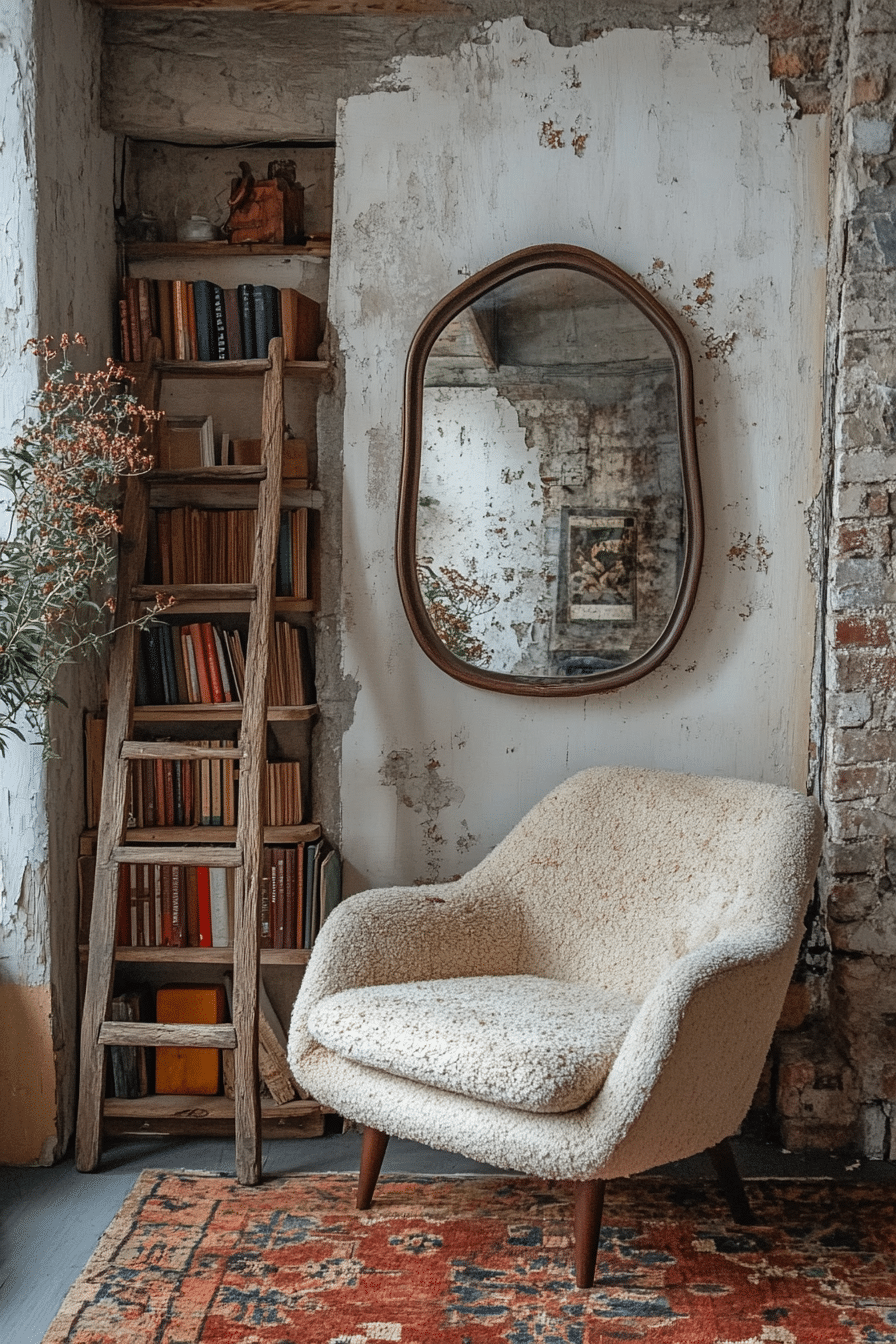
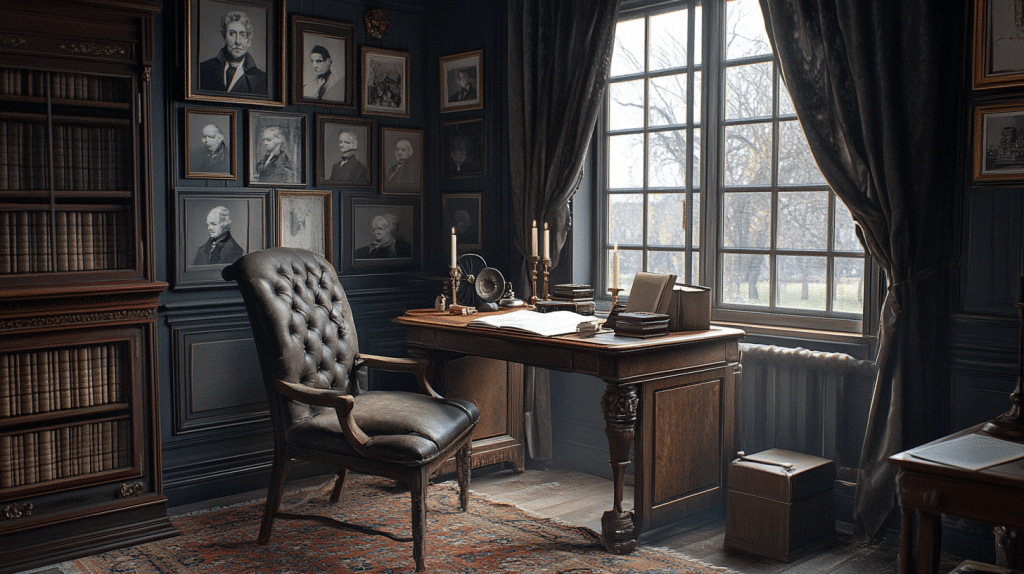
Incorporate antiques and vintage pieces that show their age through wear and patina. These items add layers of history and charm to your decor, aligning with wabi-sabi’s reverence for the past. They make your apartment feel lived-in and loved.
🌟 Steal This Look
- Paint Color: Clare Paint Saltbox Gray CW-03
- Furniture: boucle armchair with tapered walnut legs
- Lighting: simple brass wall sconce with exposed bulb
- Materials: raw exposed brick, peeling lime plaster, reclaimed wood, vintage wool rug, nubby boucle fabric
This corner feels like a Sunday morning with coffee and a dog-eared novel—unrushed, unpolished, and completely yours.
✅ Get The Look
9. Raw Stone Elegance
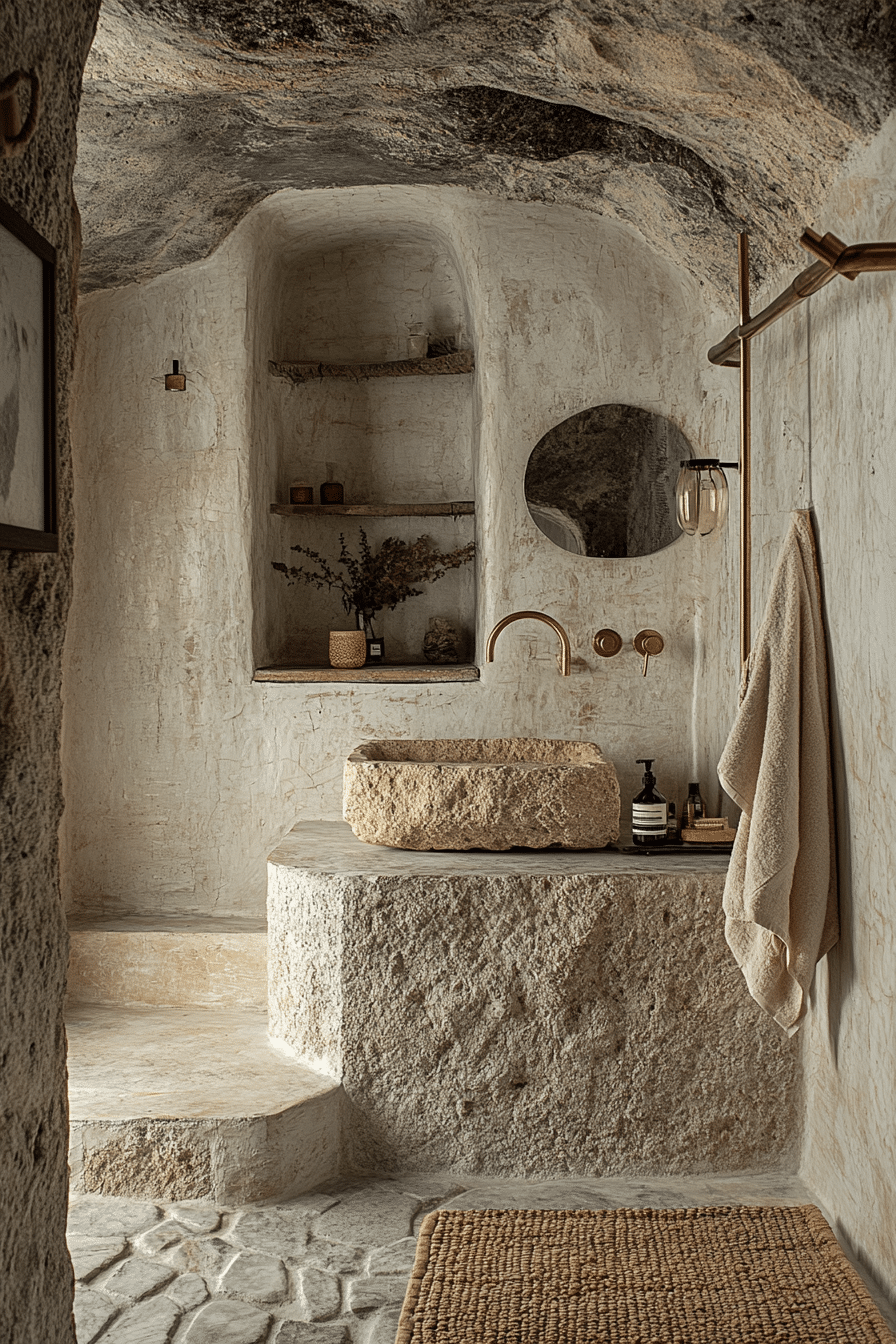
Bring in rough-hewn stone elements for an earthy, unrefined touch in your apartment. This choice embodies the wabi-sabi love for natural decay and raw beauty. It adds a grounding, authentic feel to your space.
✎ Steal This Look
- Paint Color: Fine Paints of Europe Parchment FPE-0423
- Furniture: Carved limestone vessel sink on a rough-hewn stone pedestal vanity base with curved front edge
- Lighting: Brass articulating wall sconce with clear glass globe shade and exposed filament bulb
- Materials: Unpolished travertine, hand-troweled lime plaster, natural jute, aged brass, raw linen
This bathroom feels like a sanctuary carved by time itself—there’s something deeply calming about washing your hands in stone that has witnessed centuries, reminding you that beauty lives in endurance rather than perfection.
🎁 Get The Look
10. Simple Kitchen Tools
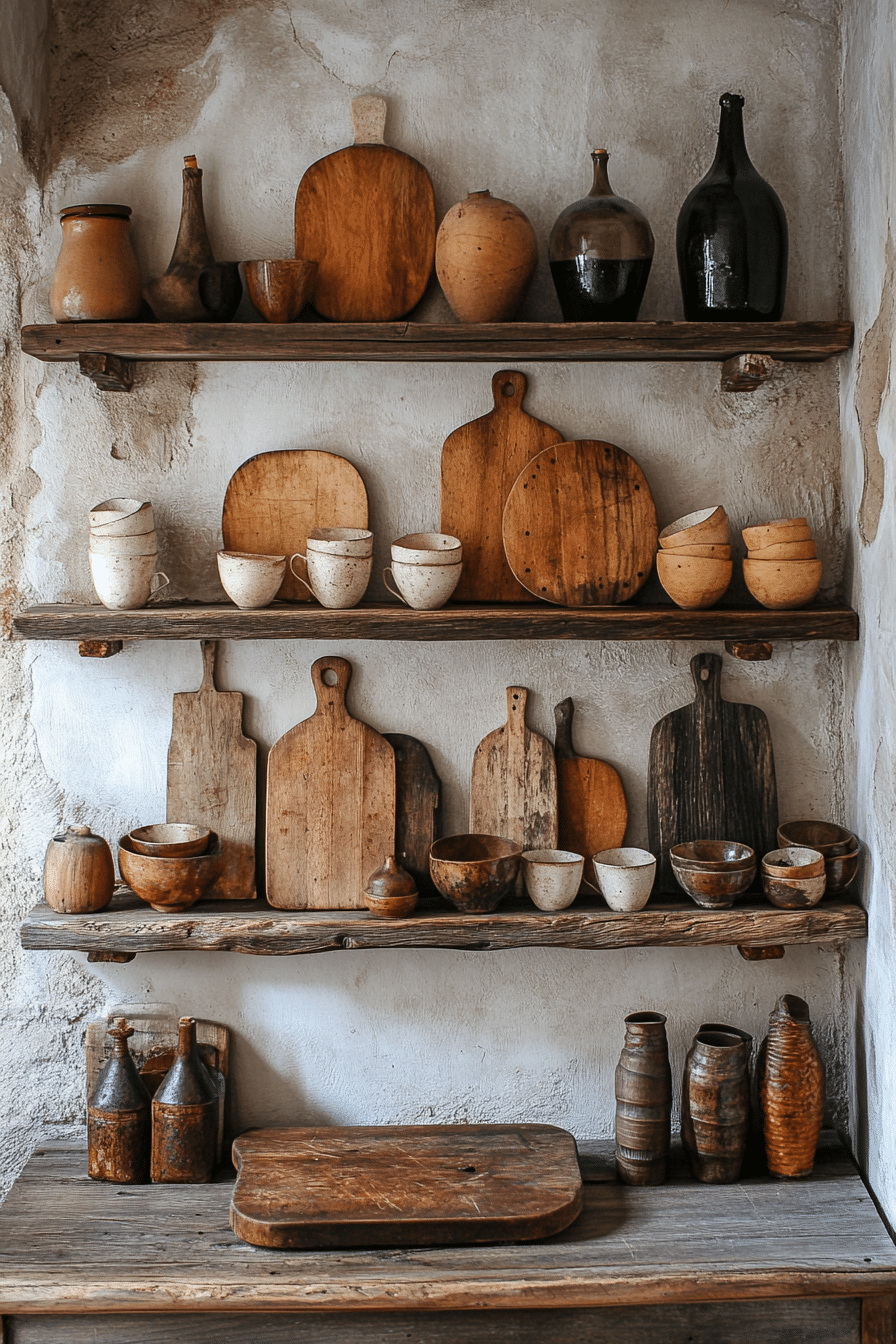
Opt for kitchenware that’s straightforward and shows signs of use, highlighting craftsmanship. These items are not just functional but also carry a story, fitting the wabi-sabi ethos. They make everyday tasks feel special.
★ Steal This Look
- Paint Color: Backdrop Plaster Paints 01
- Furniture: reclaimed barn wood floating shelves with live edge brackets
- Lighting: vintage brass swing-arm sconce with frosted glass shade
- Materials: rough-hewn oak, unglazed terracotta, hand-thrown stoneware, oxidized metal, lime-washed plaster
This is the kitchen corner that slows your morning routine down on purpose, where reaching for a mug becomes a small meditation on imperfection.
11. Casual Seating Solutions
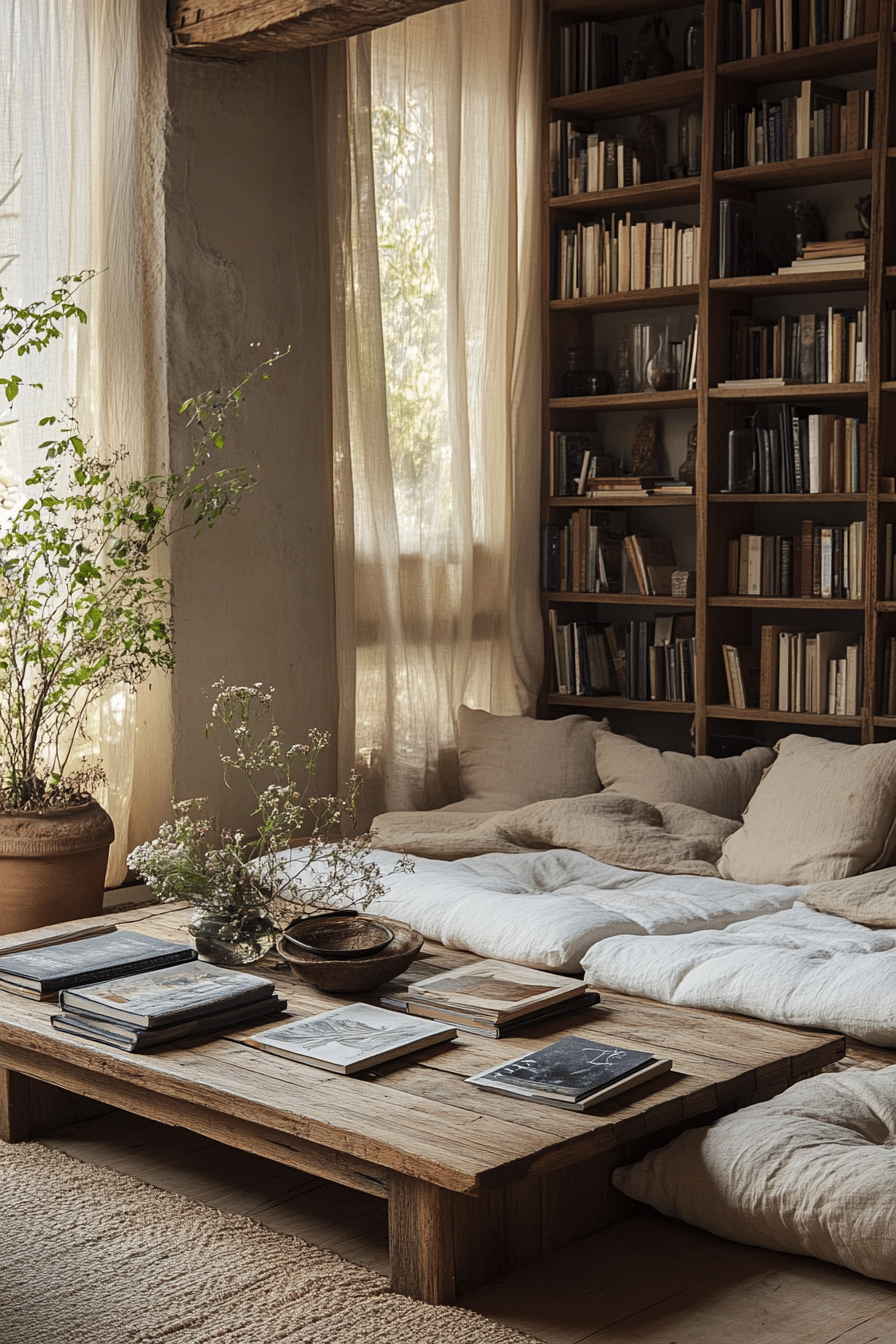
Use low, unstructured seating like floor cushions or simple sofas for a relaxed wabi-sabi vibe. This type of seating encourages informal gatherings and a laid-back lifestyle. It’s both practical and in line with wabi-sabi principles.
🏠 Steal This Look
- Paint Color: Sherwin-Williams Accessible Beige SW 7036
- Furniture: low-profile reclaimed wood coffee table with visible grain and joinery
- Lighting: natural window light softened by sheer linen curtain panels
- Materials: raw linen, weathered oak, jute, terracotta, unbleached cotton
This is the room you sink into with a novel and lose the afternoon—unstructured, imperfect, and completely yours.
✓ Get The Look
12. Textured Walls for Life
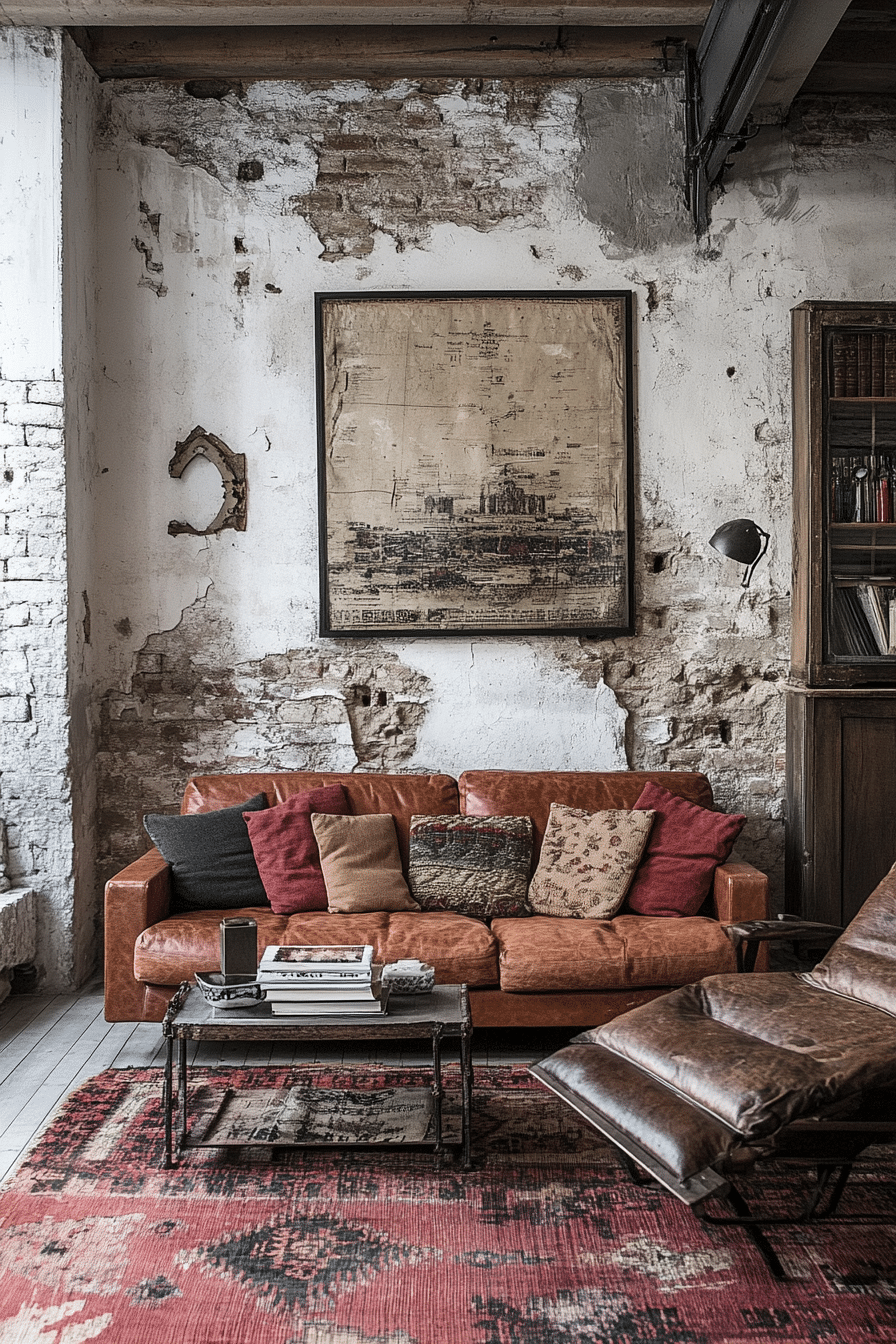
Feature walls with exposed brick or natural plaster to celebrate the beauty of material imperfection. This approach embodies the wabi-sabi idea of embracing flaws and the passage of time. It adds texture and depth to your living area.
🎨 Steal This Look
- Paint Color: Benjamin Moore White Dove OC-17
- Furniture: cognac brown leather sofa with clean lines and visible patina
- Lighting: black adjustable industrial wall sconce with metal shade
- Materials: distressed painted brick, aged leather, dark reclaimed wood, oxidized metal, faded wool rug
This room feels like it has stories to tell—every chip in the plaster and crease in the leather reminds you that lived-in spaces hold more warmth than pristine ones ever could.
👑 Get The Look
13. Handcrafted Textile Accents
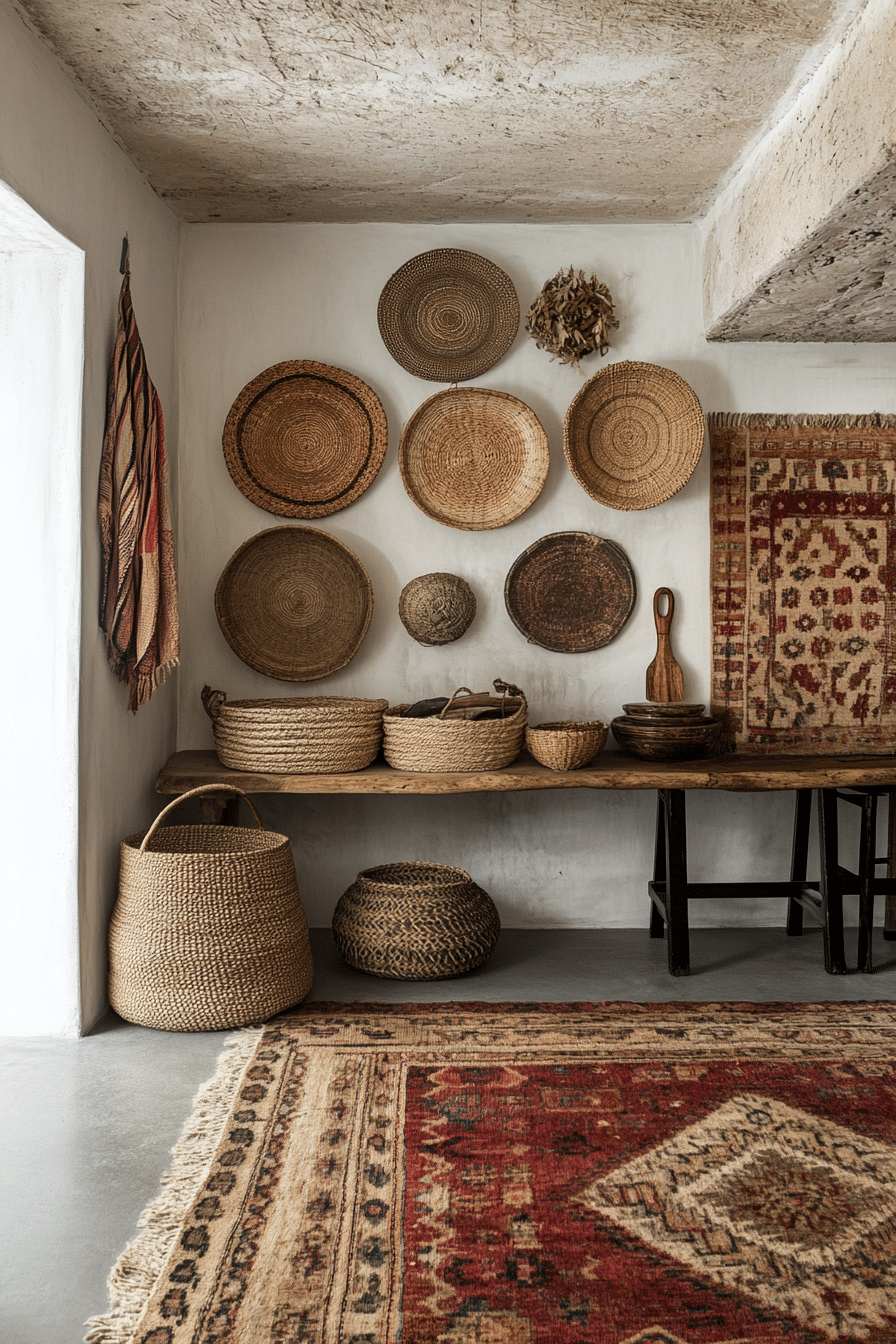
Incorporate handwoven baskets and rugs, which naturally vary in pattern and texture. These items introduce artisanal quality and warmth, enhancing your wabi-sabi decor. They’re perfect for adding a touch of handmade charm.
💡 Steal This Look
- Paint Color: Farrow & Ball School House White 291
- Furniture: live-edge walnut console table with black iron hairpin legs
- Lighting: oversized linen drum pendant with visible brass hardware
- Materials: unfinished jute, raw walnut, hand-thrown terracotta, unbleached cotton, weathered concrete
This room feels like a quiet Sunday morning—there’s permission here to let things be slightly imperfect, to actually use the objects you display, and to let time soften everything further.
14. Aged Metal Accents
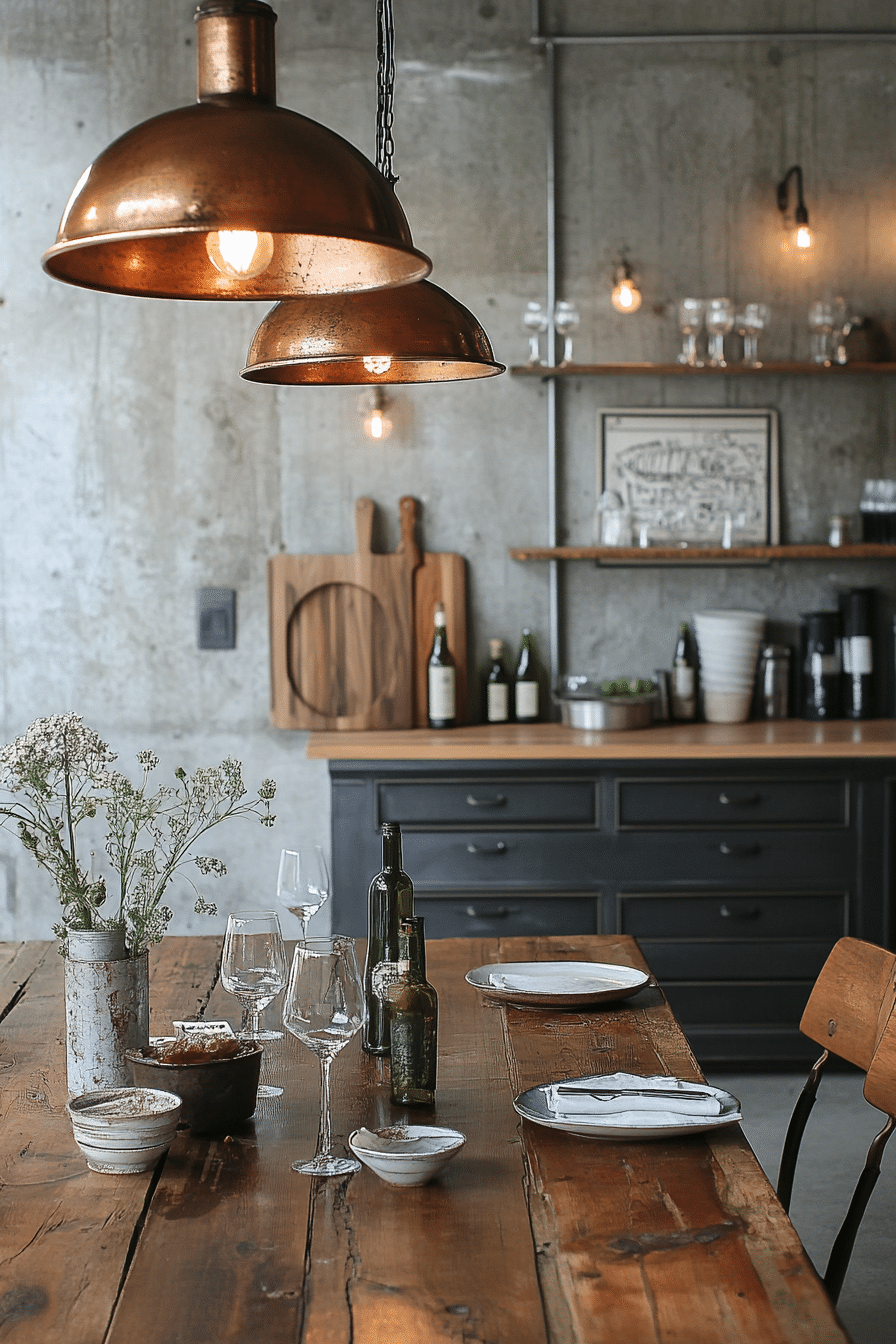
Choose fixtures like candle holders or handles made from rustic, aged metals. These pieces bring a sense of history and the beauty of aging into your home, ideal for wabi-sabi. They’re simple yet add significant character.
🖼 Steal This Look
- Paint Color: Behr Weathered Concrete PPU18-03
- Furniture: reclaimed wood farmhouse dining table with visible knots and imperfections
- Lighting: oversized copper dome pendant lights with Edison bulbs
- Materials: raw concrete, oxidized copper, reclaimed timber, matte black metal, unglazed ceramics
This kitchen feels lived-in from day one—like you’ve inherited a space with stories already embedded in every surface.
15. Live-Edge Table Centerpieces
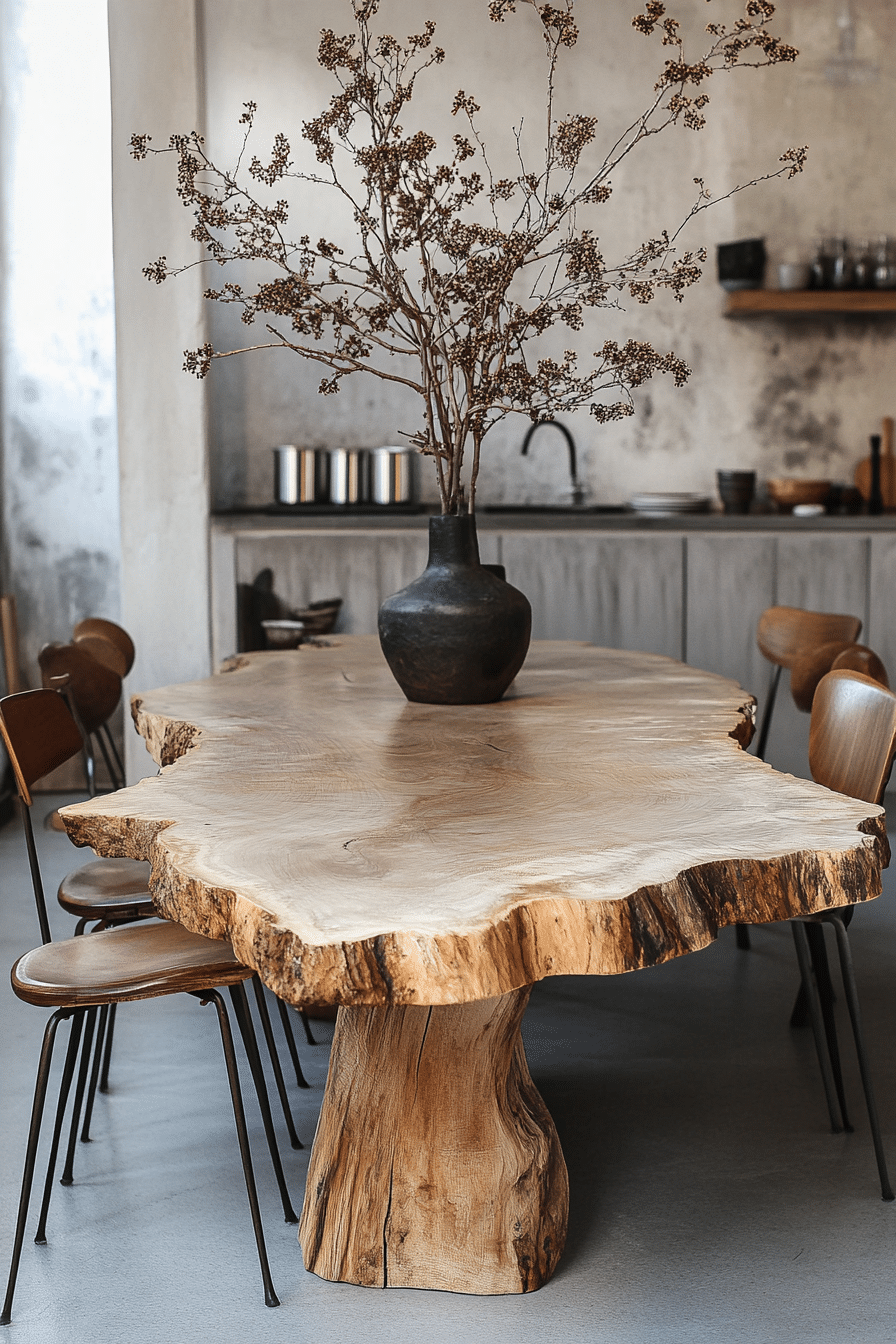
Make a statement with a live-edge wooden table, highlighting the natural, unaltered edge. This piece becomes a focal point, embodying the wabi-sabi love for natural forms. It’s both functional and a piece of art.
💡 Steal This Look
- Paint Color: Valspar Swiss Coffee 7002-16
- Furniture: live-edge acacia wood dining table with natural bark edge and tree trunk pedestal base
- Lighting: recessed or hidden ceiling lighting to keep focus on the table as art
- Materials: raw edge wood, matte black ceramic, polished concrete floors, warm walnut chair seats
This room feels like a quiet exhale—proof that one bold, imperfect piece can anchor an entire space without trying too hard.
16. Leather That Tells a Story
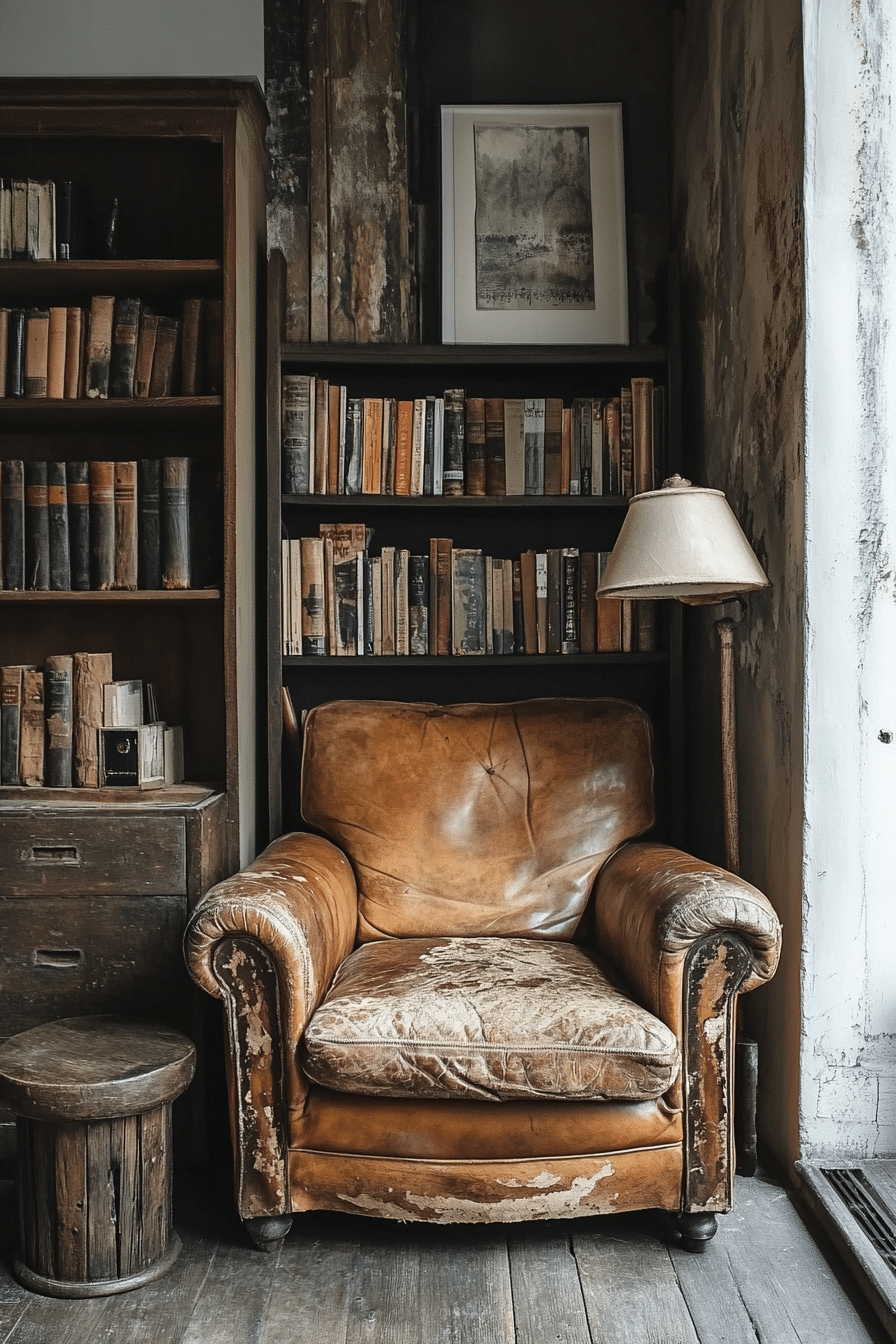
Select leather furniture that ages gracefully, gaining character over time. This aging process aligns with wabi-sabi’s appreciation for beauty in wear and use. It’s perfect for creating a space that feels warm and lived-in.
🖼 Steal This Look
- Paint Color: PPG Stonehenge Greige PPG1001-3
- Furniture: distressed cognac leather club chair with visible patina and worn arms
- Lighting: traditional floor lamp with cream linen drum shade and turned wood base
- Materials: raw reclaimed wood beams, wide-plank weathered oak flooring, cracked full-grain leather, unbleached linen
This corner feels like someone’s grandfather actually sat here, reading the same dog-eared novels for decades—that’s the intimacy wabi-sabi gifts you.
17. Gentle, Moody Light
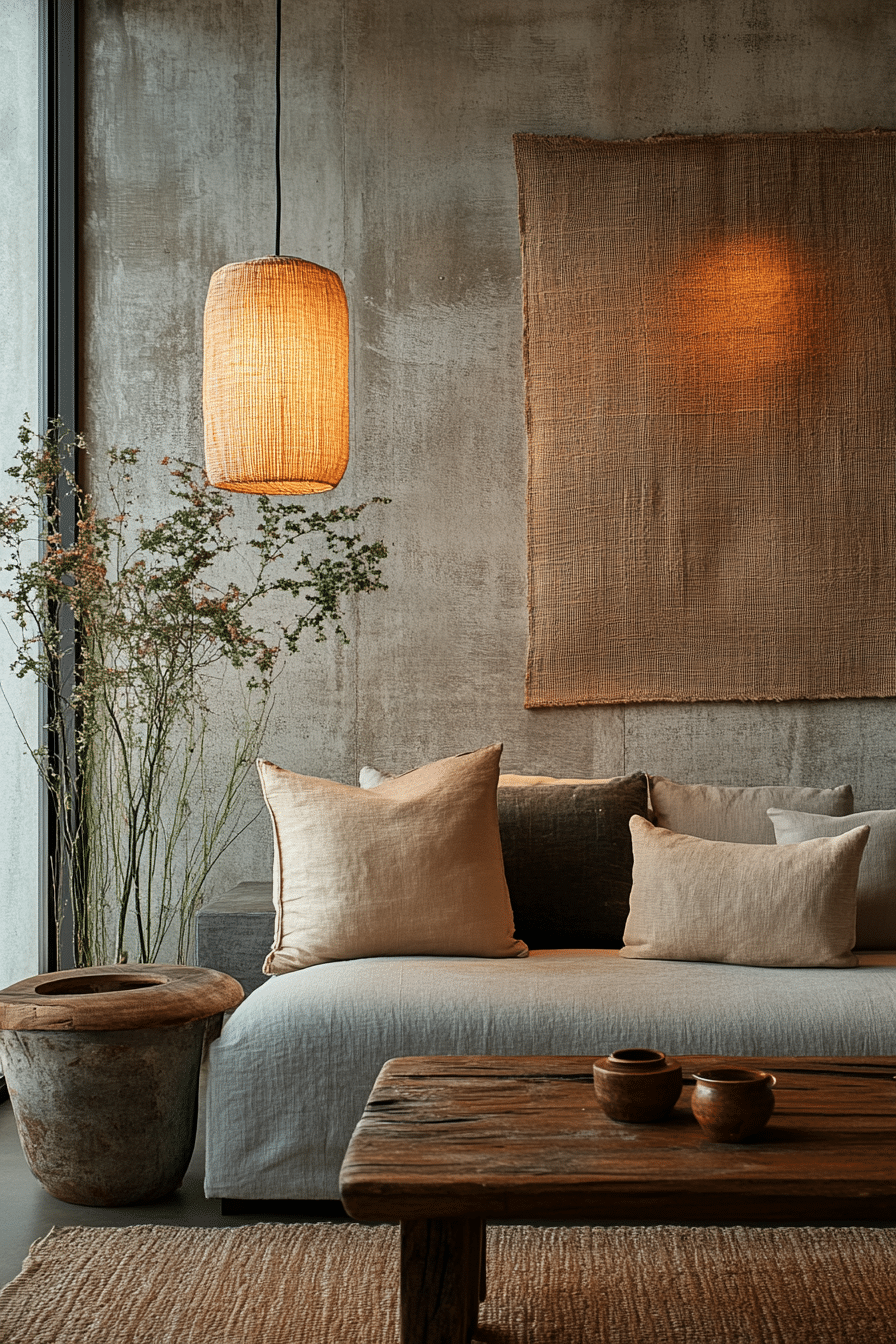
Use lamps with shades made from natural materials for a soft, uneven light. This lighting creates an atmosphere of calm and contemplation, key to wabi-sabi. It helps in setting a mood that’s both comforting and reflective.
💡 Steal This Look
- Paint Color: Dunn-Edwards Gray Stone DE6225
- Furniture: low-profile linen slipcovered sectional in light gray
- Lighting: cylindrical woven jute pendant light
- Materials: raw concrete, reclaimed wood, handwoven textiles, unglazed ceramic, natural fiber rugs
This is the room you sink into after a hard day, where the rough walls remind you that perfection is overrated and the dim glow makes every evening feel like a slow exhale.
18. Miniature Nature Gardens
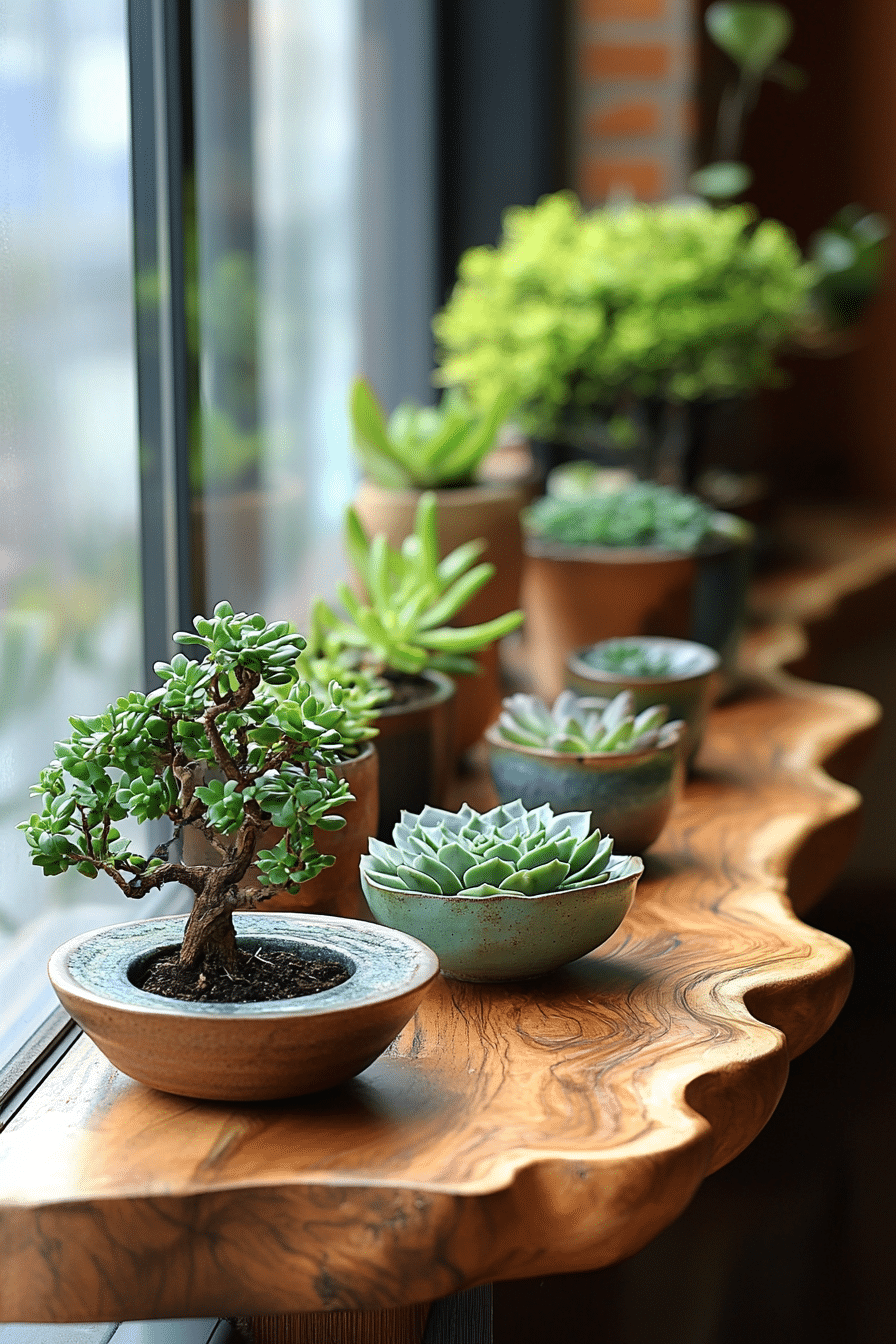
Cultivate small gardens with bonsai or succulents, reflecting wabi-sabi’s focus on simplicity and growth. These plants bring a piece of nature indoors, promoting peace and tranquility. They’re easy to care for and add life to your space.
💡 Steal This Look
- Paint Color: Clare Paint Iron Mountain CL03
- Furniture: live-edge wood console table with organic curved edges
- Lighting: simple brass picture light or unobtrusive LED strip for plant shelf
- Materials: raw edge walnut or acacia wood, unglazed terracotta, matte ceramic, visible wood grain
This corner feels like a breath of morning quiet—it’s the kind of setup that rewards you for slowing down to water something small and watch it grow.
19. Reclaimed Wood Shelves
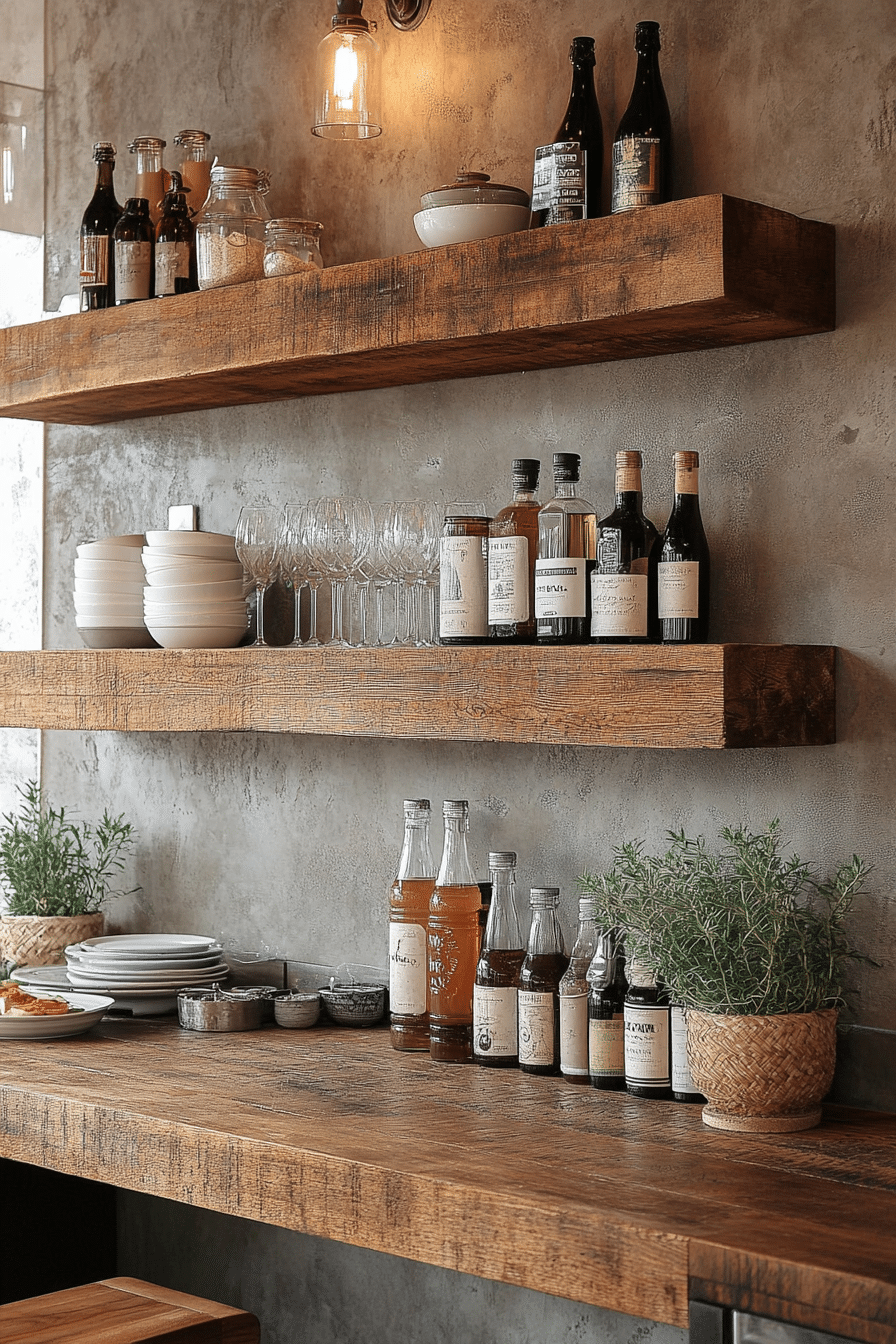
Install shelving made from reclaimed wood, celebrating its past life and natural aging. This not only adds storage but also introduces a narrative and visual interest. It’s a practical way to embrace wabi-sabi.
🖼 Steal This Look
- Paint Color: Fine Paints of Europe Kalkverf Warm Gray KV-14
- Furniture: thick reclaimed barn wood floating shelves with live edges, 3-inch minimum thickness
- Lighting: industrial brass wall sconce with clear glass cylinder shade and Edison bulb
- Materials: raw concrete plaster walls, reclaimed oak shelving, woven seagrass planters, vintage ceramic dishware
This kitchen feels like it evolved over decades, not decorated in a weekend—that lived-in warmth is what makes wabi-sabi spaces so grounding to cook and gather in.
20. Zen Spaces for Peace
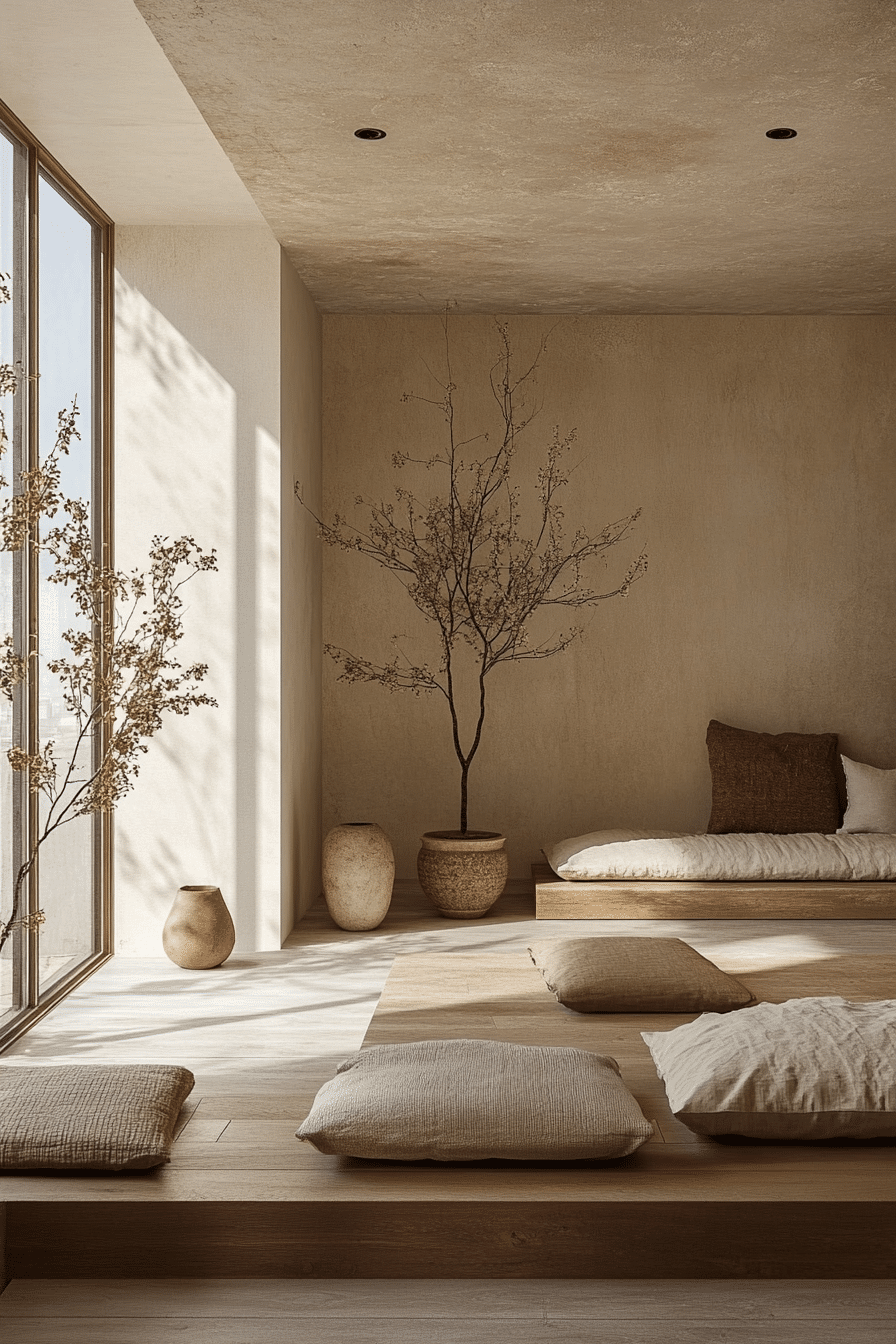
Design corners or areas inspired by zen principles, using elements like pebbles or bamboo. These spaces focus on balance, simplicity, and natural flow, embodying wabi-sabi. They’re perfect for meditation or relaxation.
In conclusion, these wabi sabi apartment ideas offer the perfect way to infuse your space with simple charm and serene beauty. By embracing the philosophy of imperfection, natural textures, and minimalist design, you can create a home that feels both relaxed and stylish. Whether you incorporate handmade pieces, earthy tones, or vintage finds, these ideas help you craft a space that celebrates simplicity and authenticity. Embrace these wabi sabi apartment ideas to create a calming, warm environment that reflects the beauty in the imperfect moments of everyday life.
🌟 Steal This Look
- Paint Color: Backdrop Mushroom House 05-14
- Furniture: low-profile Japanese platform bed frame in natural oak
- Lighting: recessed ceiling spotlights with warm 2700K bulbs
- Materials: textured lime plaster walls, raw linen bedding, unglazed ceramic vessels, light oak flooring
This room invites you to slow down—there’s nowhere to hide from yourself here, and that’s the whole point.