Mediterranean Homes: A Timeless Sanctuary of Warmth and Elegance
Imagine walking into a home that breathes the relaxed spirit of coastal Spain, Italy, and Greece. A Mediterranean home isn’t just a house—it’s a lifestyle that seamlessly blends indoor comfort with outdoor beauty.
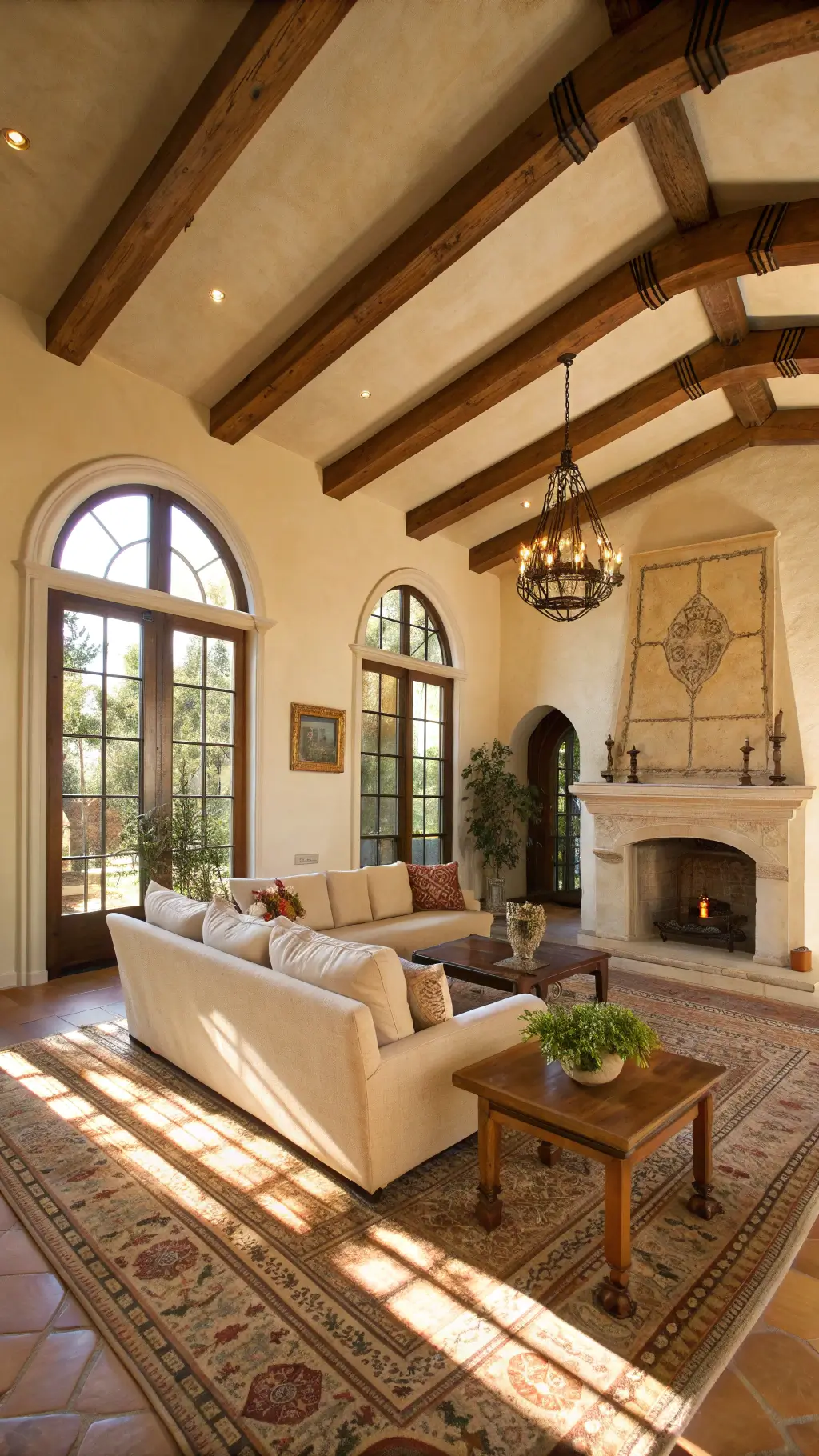
🎨 Steal This Look
- Paint Color: Sherwin-Williams Barcelona Beige SW 7530
- Furniture: a distressed white-washed dining table with turned legs and a weathered oak top, paired with woven rush-seat ladder-back chairs
- Lighting: a wrought iron chandelier with amber glass hurricanes and scrolling acanthus leaf details
- Materials: hand-plastered walls with subtle undulations, reclaimed terracotta floor tiles, rough-hewn ceiling beams, and aged brass hardware
There’s something deeply grounding about a Mediterranean space—it slows you down, invites lingering conversations over long meals, and reminds you that beauty doesn’t need to be fussy to feel luxurious.
What Makes Mediterranean Homes Unique?
Mediterranean homes are more than architectural styles—they’re living experiences crafted to embrace natural light, breathe with the landscape, and create an instant sense of calm.
Key Architectural Characteristics
Design Philosophy:
- Open, flowing spaces that dissolve boundaries between inside and outside
- Emphasis on natural light and ventilation
- Structures that respond beautifully to warm, sunny climates
Exterior Masterpiece: Beyond Just Walls
Signature Exterior Elements:
- Stucco Walls: Thick, textured surfaces in soft, light colors
- Terracotta Roof Tiles: Low-pitched, functional, and visually stunning
- Symmetrical Facades: Balanced, harmonious street presence
- Wrought Iron Accents: Decorative yet functional details
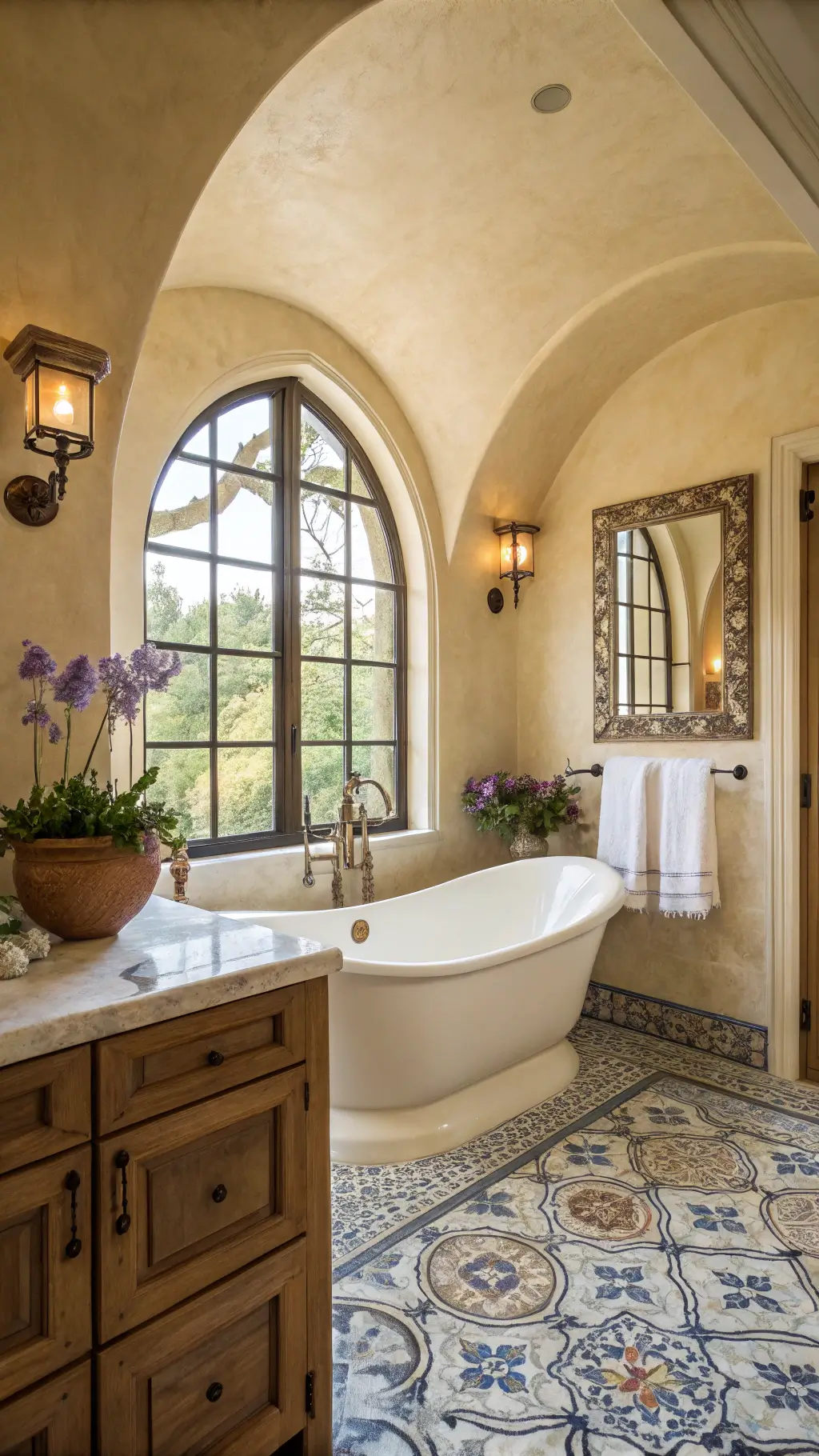
Interior Elegance: Where Comfort Meets Style
Interior Design Highlights:
- High ceilings creating spacious, airy environments
- Exposed wooden ceiling beams
- Intricate tile work
- Color palette featuring whites, blues, and earth tones
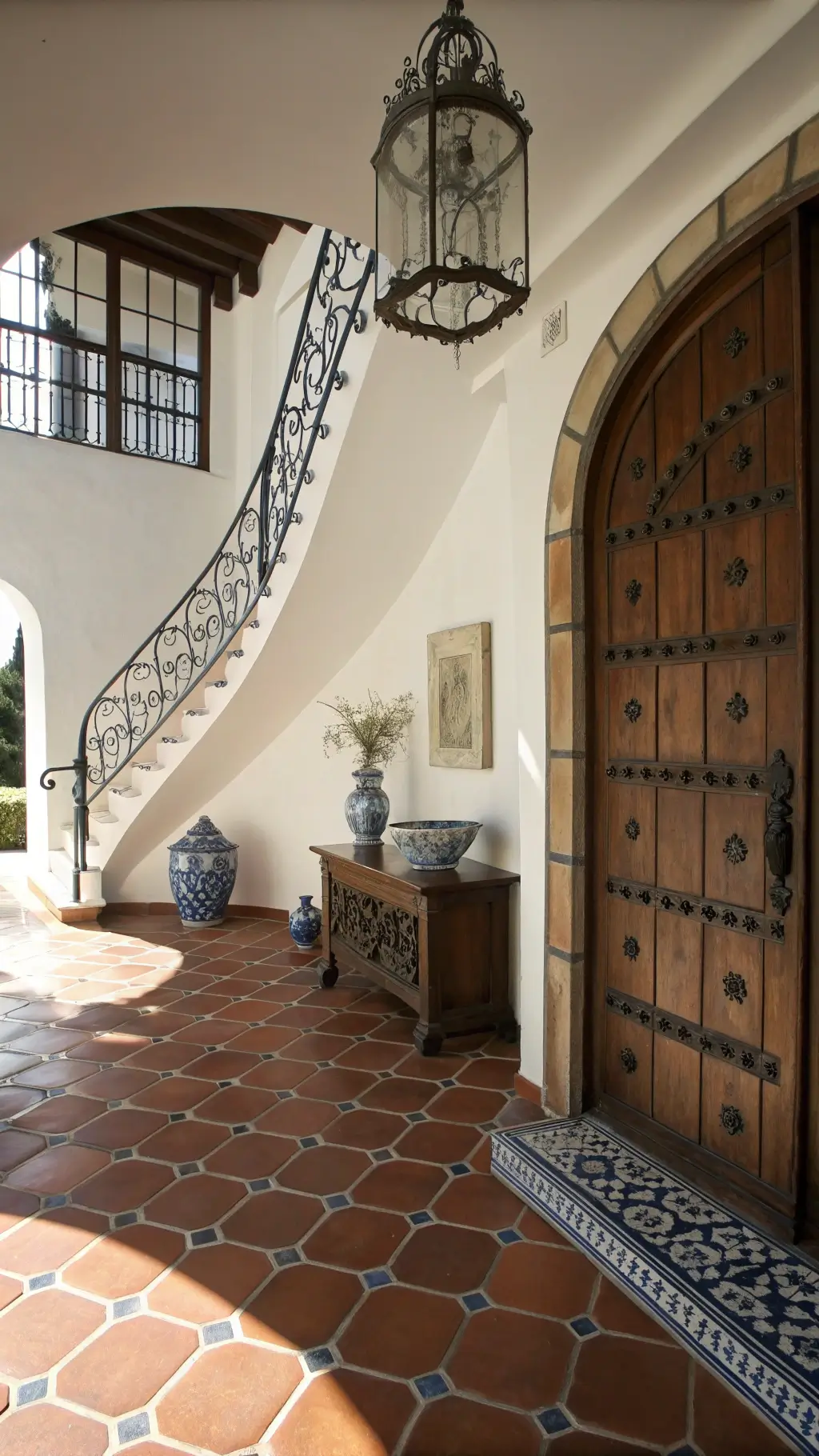
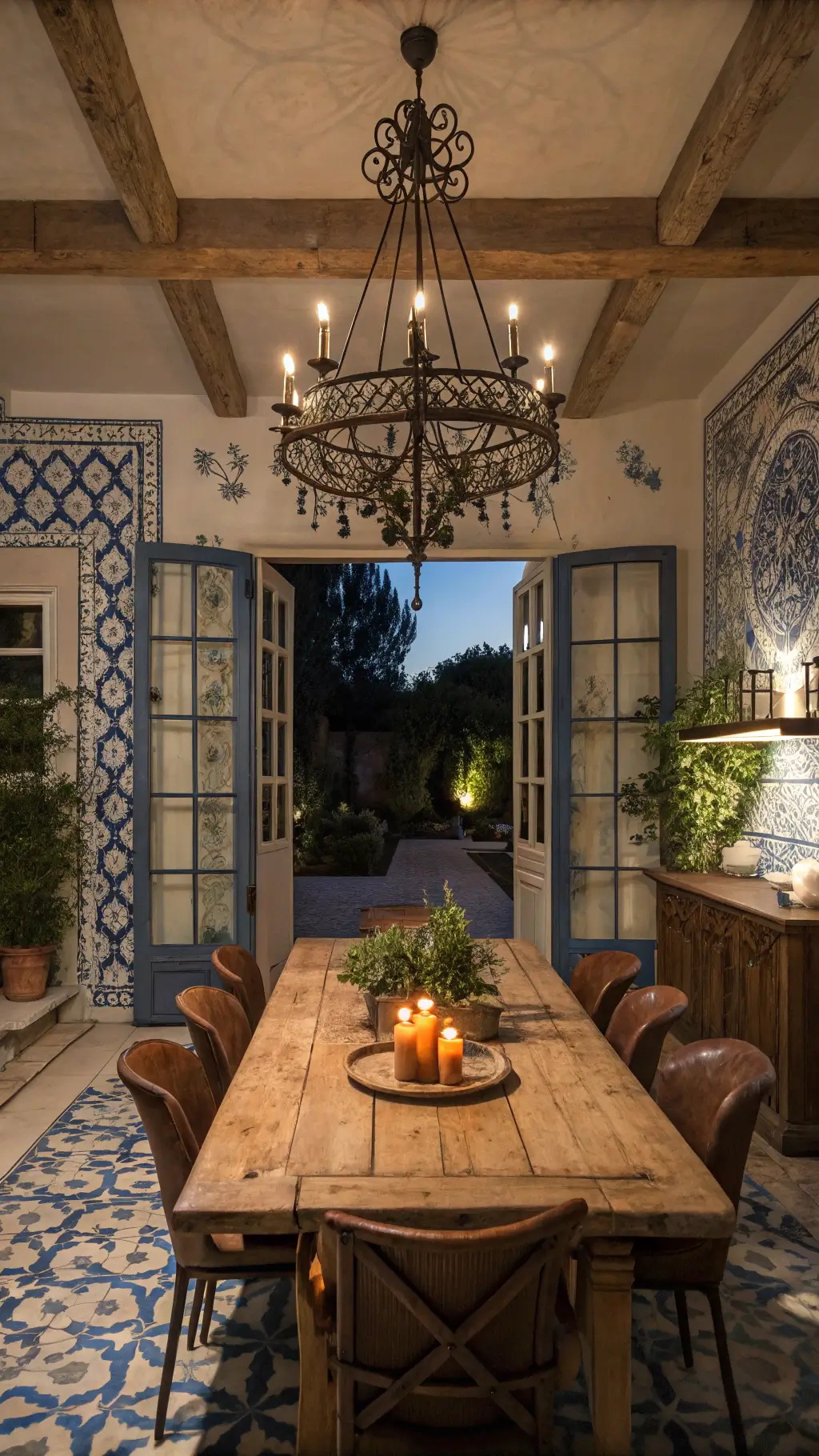
🎨 Steal This Look
- Paint Color: Benjamin Moore Swiss Coffee OC-45
- Furniture: A substantial farmhouse-style dining table in reclaimed oak with turned legs, paired with woven rush-seat side chairs and a distressed wood sideboard featuring iron hardware
- Lighting: Wrought iron chandelier with candle-style lights and hand-forged scrollwork, ideally with a dark bronze or aged iron finish
- Materials: Hand-plastered walls with subtle texture, Saltillo or reclaimed terracotta floor tiles, exposed wooden ceiling beams in dark walnut or chestnut, natural linen textiles, and aged brass or iron metalwork
There’s something deeply grounding about walking into a Mediterranean-inspired space—the way the afternoon light hits those textured walls makes even weekday dinners feel like a slow Sunday in Provence.
Creating Your Mediterranean Sanctuary
Design Considerations
Perfect For:
- Homeowners in warm, coastal regions
- Design enthusiasts loving indoor-outdoor connectivity
- Those appreciating natural materials and craftsmanship
Best Suited Locations:
- Coastal areas
- Regions with Mediterranean-like climates
- Spacious lots (though adaptable to smaller spaces)
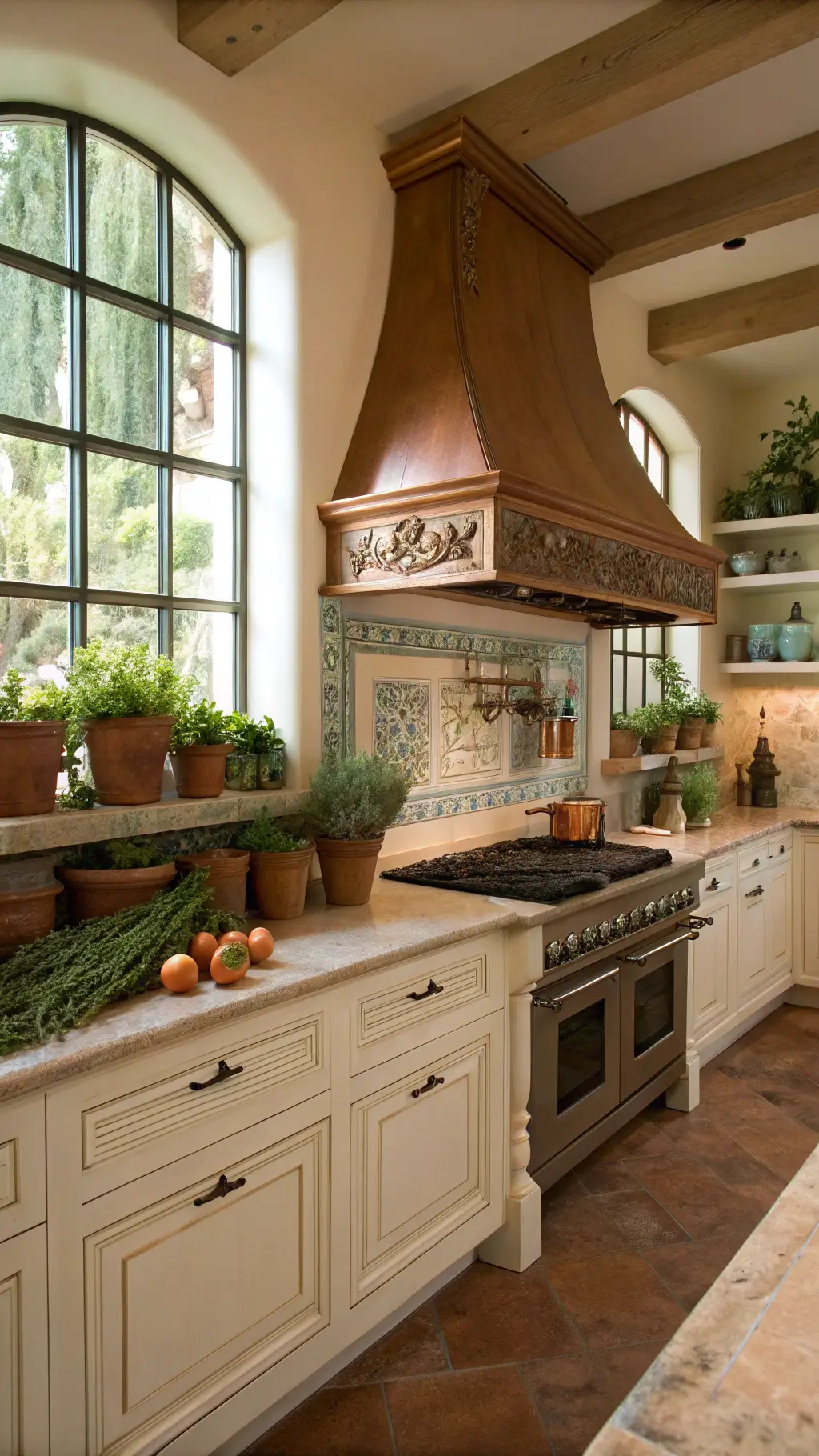
Practical Implementation
DIY Complexity: Intermediate to Expert
- Requires specialized skills in:
- Stucco application
- Custom tile work
- Architectural detailing
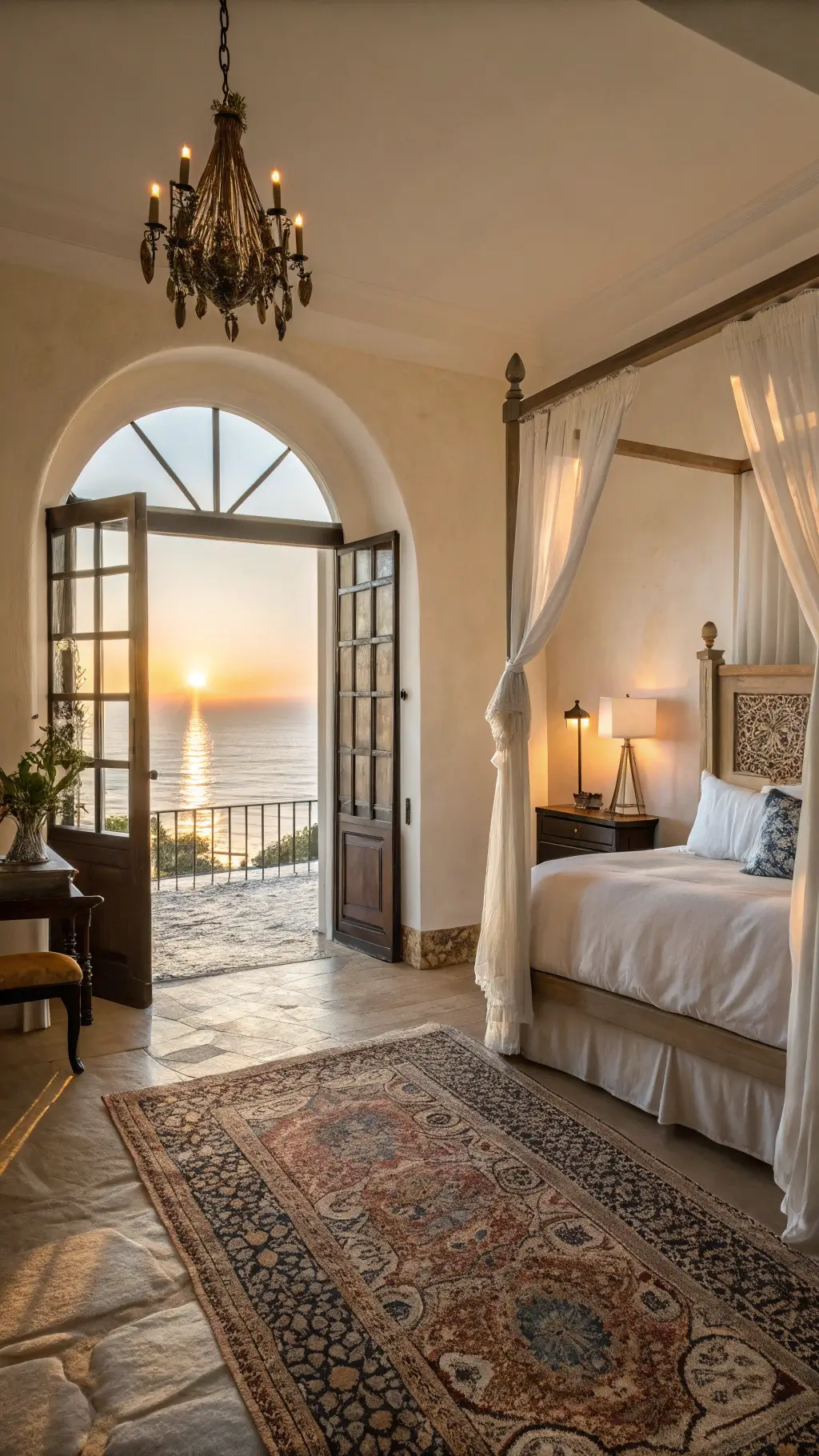
🏠 Steal This Look
- Paint Color: Farrow & Ball Joa’s White 201
- Furniture: weathered teak outdoor dining table with concrete base, paired with woven rope lounge chairs in natural jute
- Lighting: hand-forged iron lantern pendant with seeded glass, scaled for covered loggia or pergola ceiling
- Materials: hand-troweled lime plaster walls, reclaimed terracotta roof tiles, rough-hewn cedar beams, Moroccan zellige tile accents
There’s something deeply grounding about a space that breathes with its environment—this room should feel like it existed long before you arrived and will remain long after, connecting daily rituals to centuries of coastal living.
Modern Mediterranean: Evolution of a Timeless Style
Contemporary interpretations now include:
- Sliding glass walls
- Retractable door systems
- Integrated technology
- Luxury amenities like rooftop pools
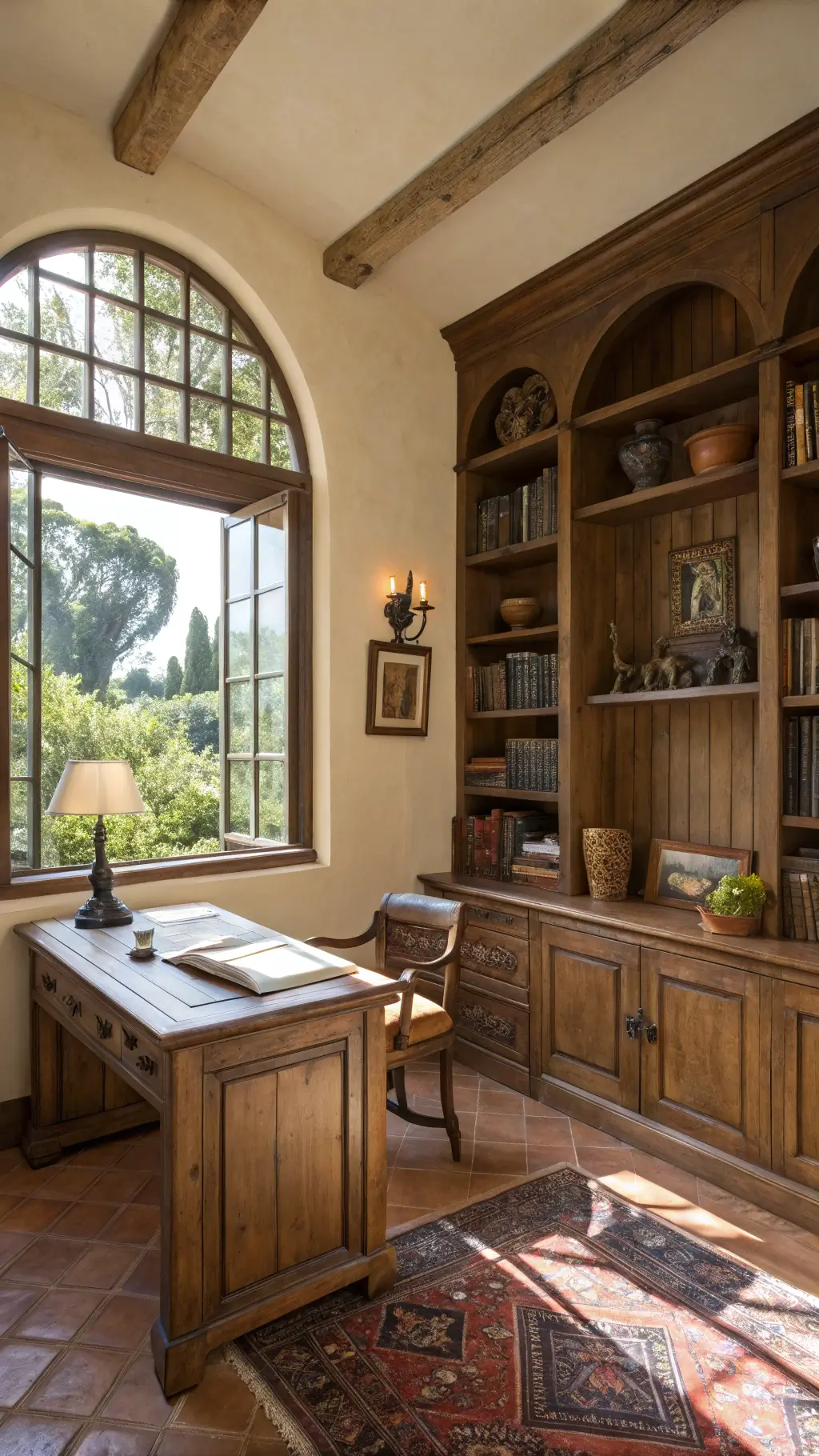
Psychological Impact
Interestingly, research suggests the curved architectural features of Mediterranean homes—like arched windows and rounded doorways—are perceived as more emotionally satisfying compared to angular designs.
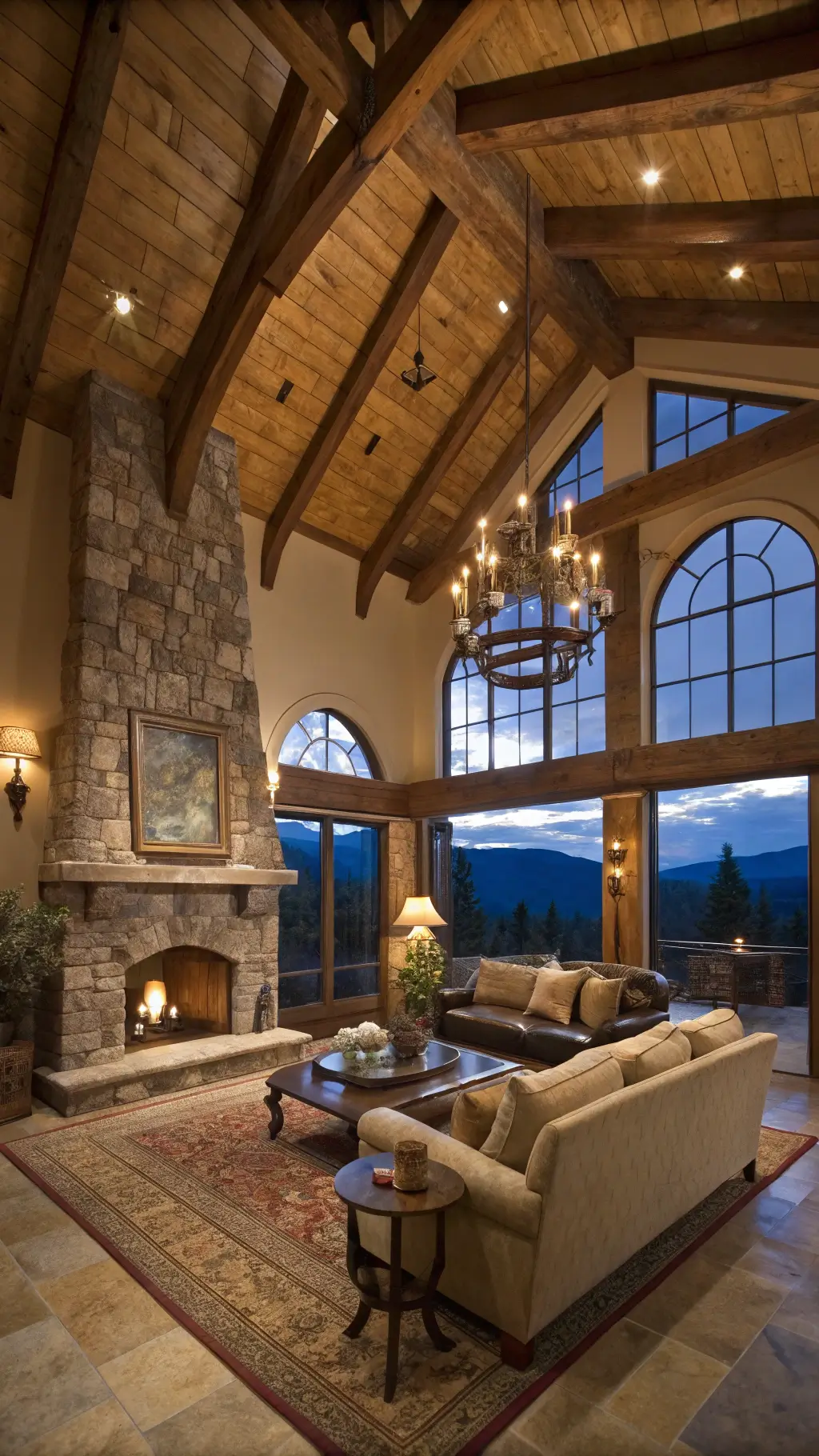
🖼 Steal This Look
- Paint Color: Behr Soft Focus N230-2
- Furniture: low-profile sectional in natural linen with clean lines, paired with a travertine coffee table on a thin black metal base
- Lighting: oversized arched floor lamp in aged brass with a linen drum shade
- Materials: polished concrete floors, white oak ceiling beams, black steel window frames, hand-troweled plaster walls
There’s something almost primal about walking through an arched threshold—it slows you down just enough to notice the shift in space, and that’s the moment modern Mediterranean design does its best work.
Pro Tips for Authentic Mediterranean Design
Quick Implementation Strategies:
- Prioritize natural material textures
- Maximize natural light
- Create seamless indoor-outdoor transitions
- Use a neutral, warm color palette
- Incorporate wrought iron and ceramic details
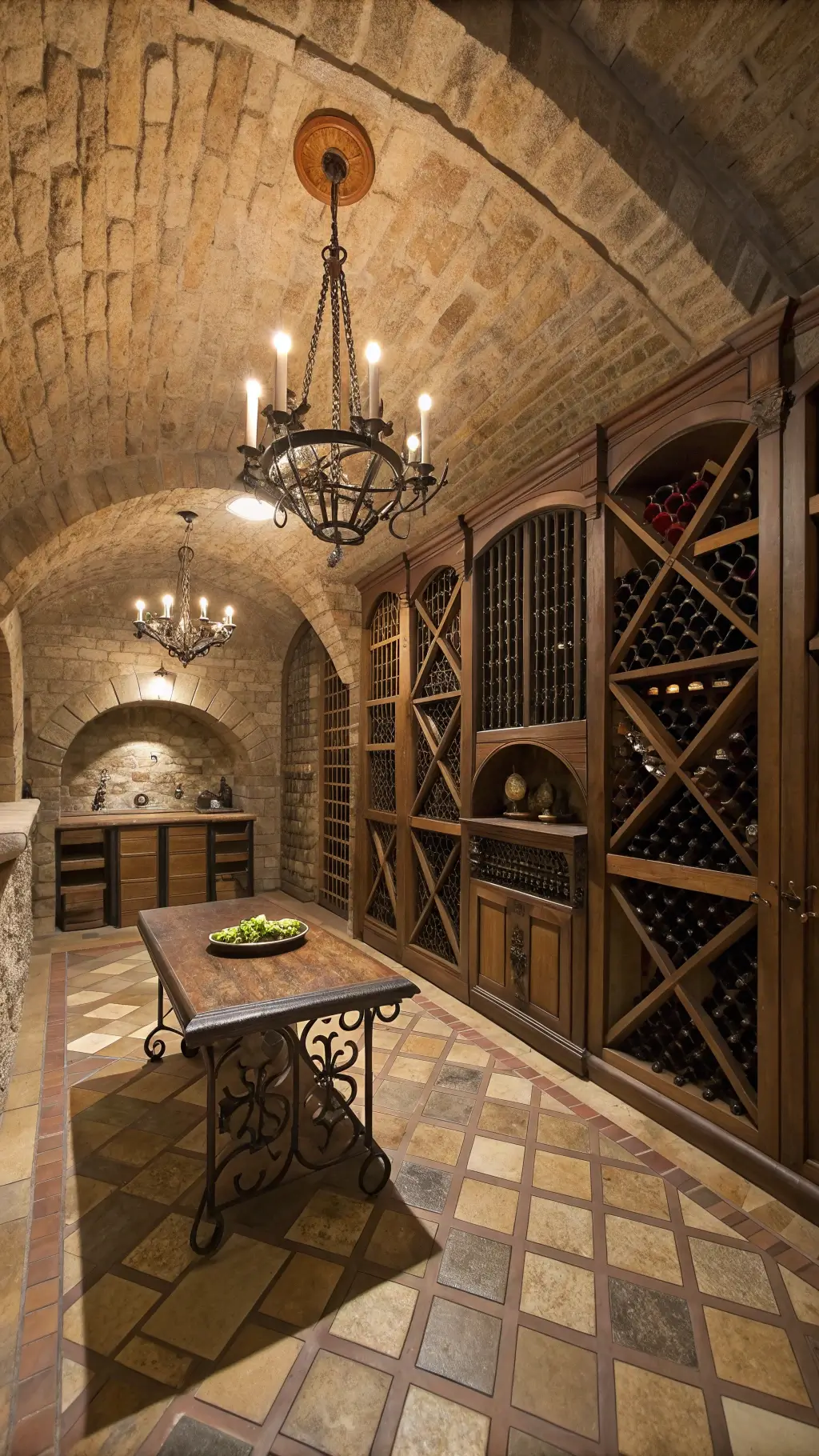
🌟 Steal This Look
- Paint Color: Valspar Homestead Resort Tan 3009-10
- Furniture: reclaimed wood farmhouse dining table with trestle base
- Lighting: wrought iron chandelier with candle-style bulbs and aged bronze finish
- Materials: hand-plastered walls, terracotta tile, weathered oak, hand-forged iron, natural linen
This is the room where Sunday lunches stretch into evenings, where wine glasses leave rings on unvarnished wood, and where you stop apologizing for the patina—because here, lived-in is the whole point.
Cost and Value Considerations
Mediterranean homes offer:
- Enhanced energy efficiency
- Increased property value
- Timeless aesthetic appeal
- Functional design adapted to climate
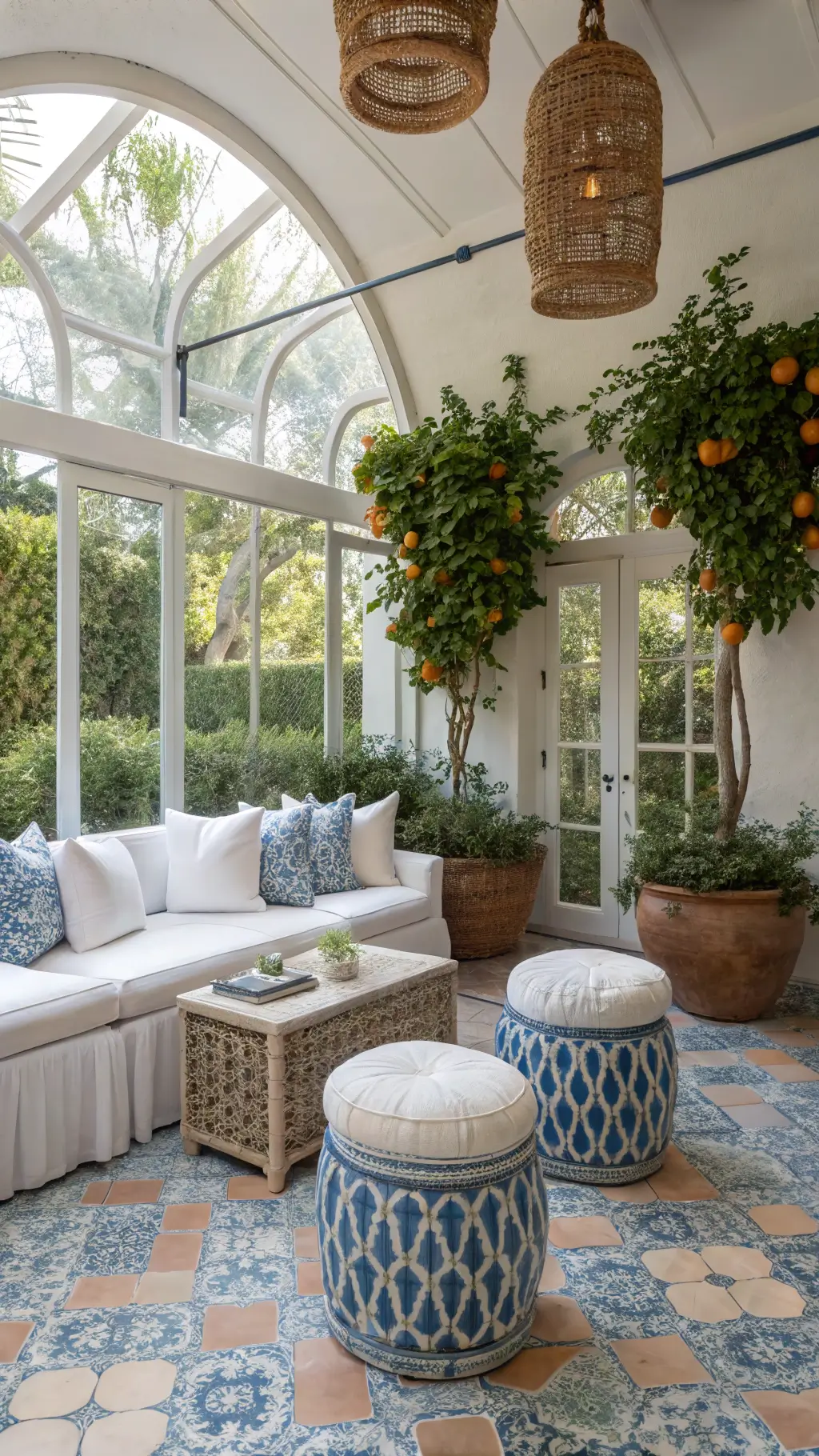
✎ Steal This Look
- Paint Color: PPG Warm Stone PPG1074-5
- Furniture: reclaimed wood farmhouse dining table with hand-forged iron base
- Lighting: oversized wrought iron lantern pendant with seeded glass panels
- Materials: hand-plastered walls, terracotta roof tiles, limestone flooring, aged brass hardware
There’s something deeply satisfying about a home that works with its environment rather than against it—when your cooling bills drop and neighbors comment on your timeless curb appeal, you’ll understand why Mediterranean architecture endures across centuries and markets.
Final Thoughts
A Mediterranean home is more than an architectural style—it’s a holistic approach to living that celebrates light, space, and natural beauty.
Remember: True Mediterranean design is about creating a feeling, not just copying a look.
Quick Reference Keywords
- Mediterranean home design
- Indoor-outdoor living
- Coastal home inspiration
- Stucco architecture
- Mediterranean lifestyle