Modern Garden Design 2025: Creating Your Outdoor Sanctuary with Minimal Effort and Maximum Style
Ever walked into a backyard and felt instantly calm, inspired, and totally in love with the space? That’s the magic of modern garden design – and I’m about to show you exactly how to create that vibe in your own outdoor area.
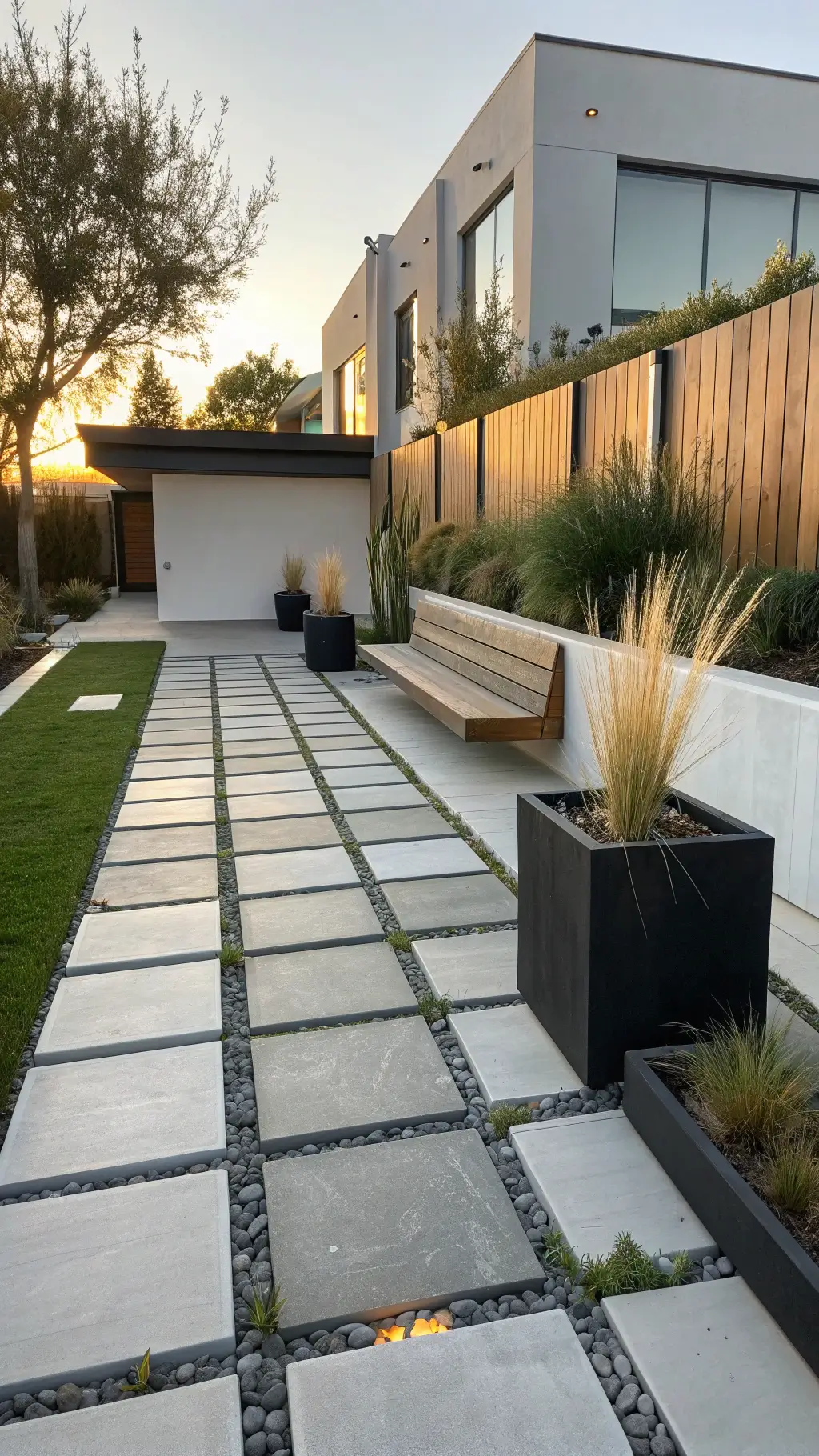
★ Steal This Look
- Paint Color: Sherwin-Williams Ripe Olive SW 6209
- Furniture: low-profile teak sectional with weathered gray finish, paired with concrete cube side tables
- Lighting: bollard LED path lights with matte black finish and warm 2700K output
- Materials: smooth poured concrete pavers, untreated cedar decking, black metal frames, drought-tolerant ornamental grasses, river rock mulch
There’s something deeply satisfying about stepping into a garden that feels designed rather than decorated—where every element earns its place and the negative space breathes as much as the greenery.
Why Modern Garden Design Matters in 2025
Modern garden design isn’t just about looking good. It’s about creating a functional, sustainable space that feels like an extension of your home. Think less maintenance, more relaxation.
Key Design Principles
Clean Lines, Natural Vibes
- Geometric layouts that feel intentional
- Streamlined hardscaping
- Minimal but impactful plant selections
- Sustainable, low-maintenance approach
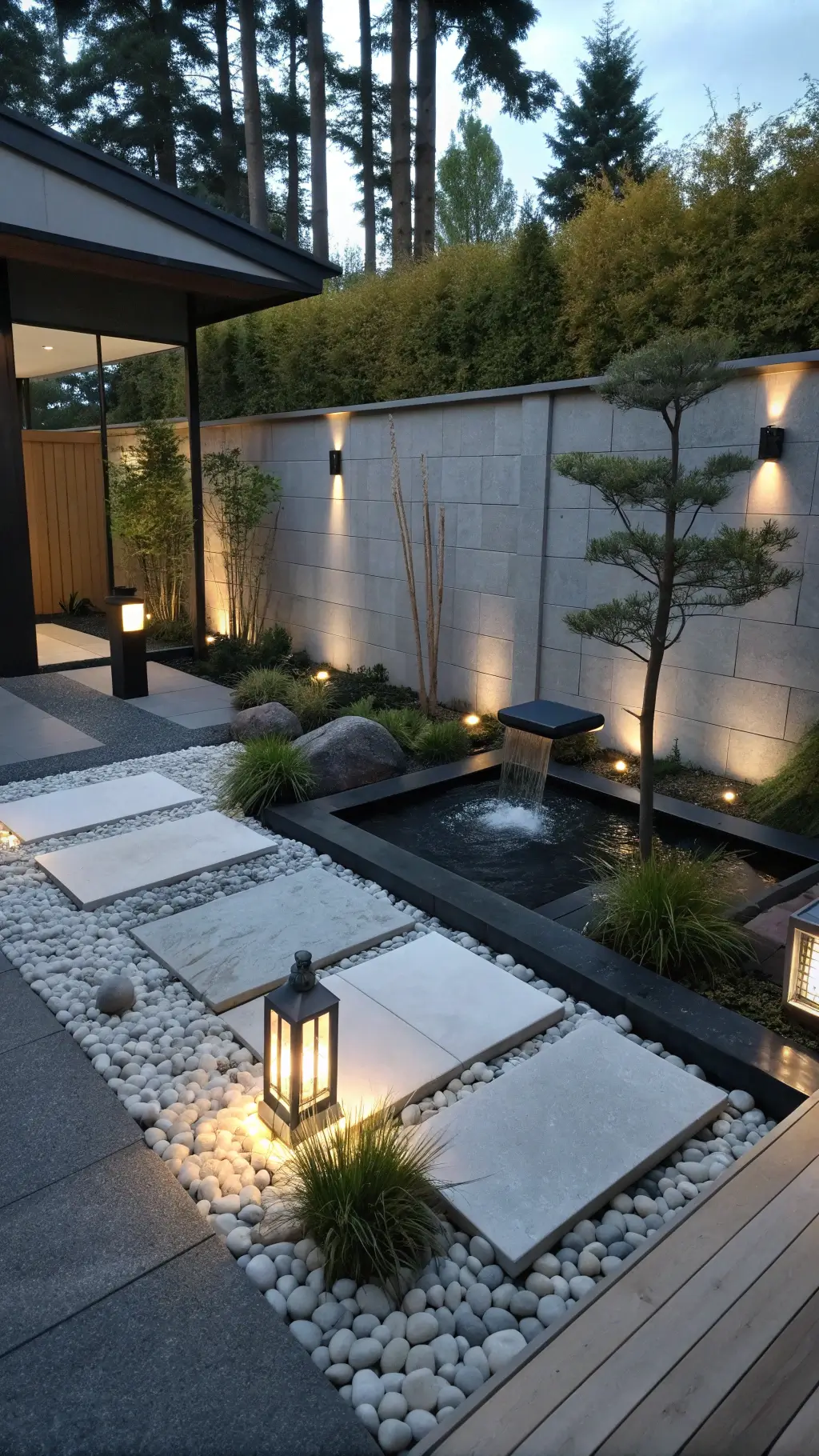
🌟 Steal This Look
- Paint Color: Benjamin Moore Backwoods 469
- Furniture: modular outdoor sectional with weathered teak frame and quick-dry foam cushions
- Lighting: linear LED path lights with warm 2700K output and matte black powder-coated aluminum housings
- Materials: polished concrete pavers, corten steel planters, FSC-certified ipe decking, crushed granite aggregate
There’s something deeply satisfying about stepping into a garden that knows exactly what it wants to be—no visual clutter, no guilt about neglected corners, just clean air and the quiet confidence of intentional design.
Essential Elements for Your Modern Garden Transformation
The Must-Have Pieces
Structural Foundations
- Concrete or stone pavers
- Minimalist planters
- Sleek outdoor seating
- Water features or modern fire pits
Color Palette Secrets
Neutral Doesn’t Mean Boring
- Cool grays
- Soft whites
- Muted blacks
- Rich greens as accent colors
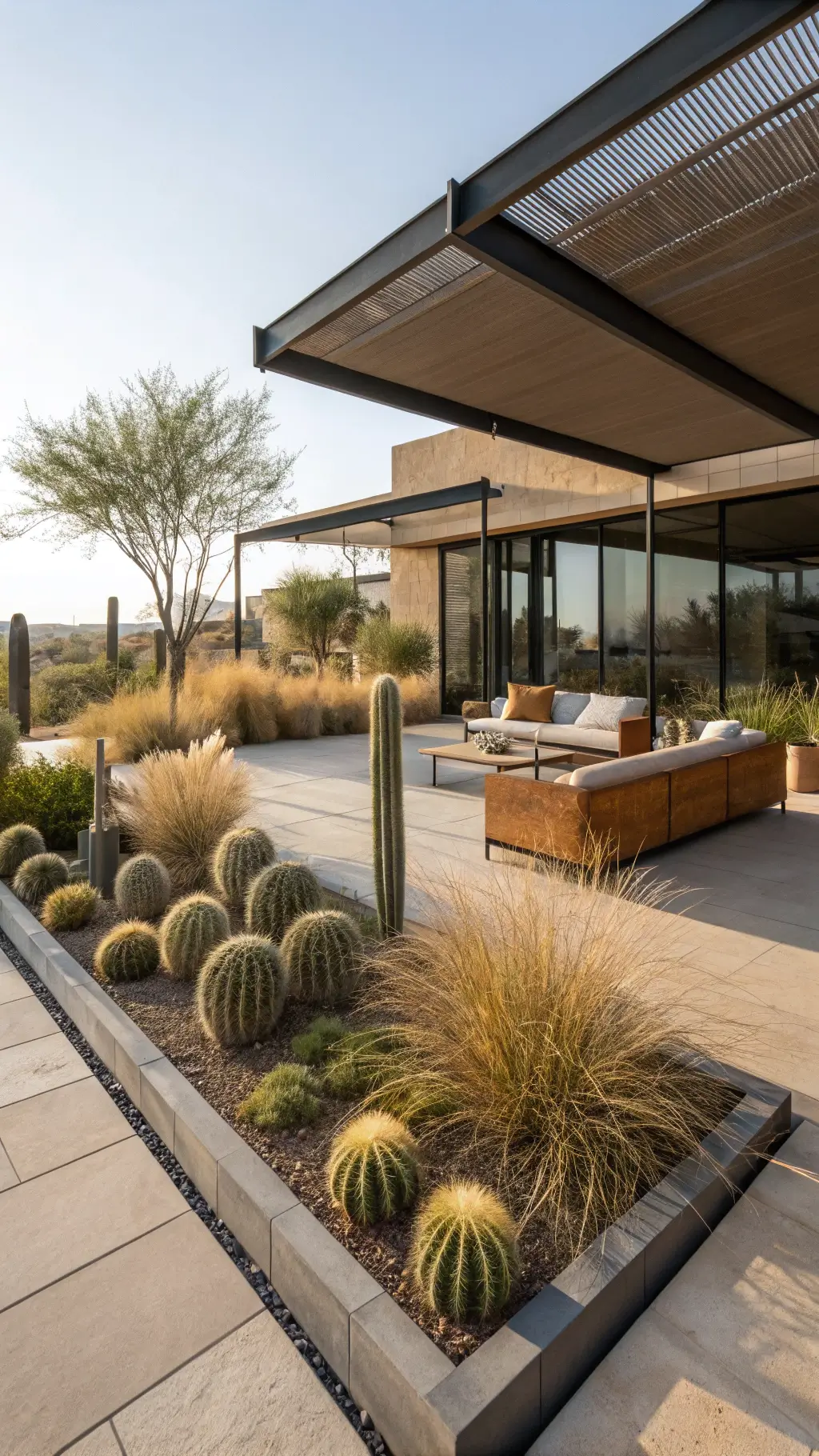
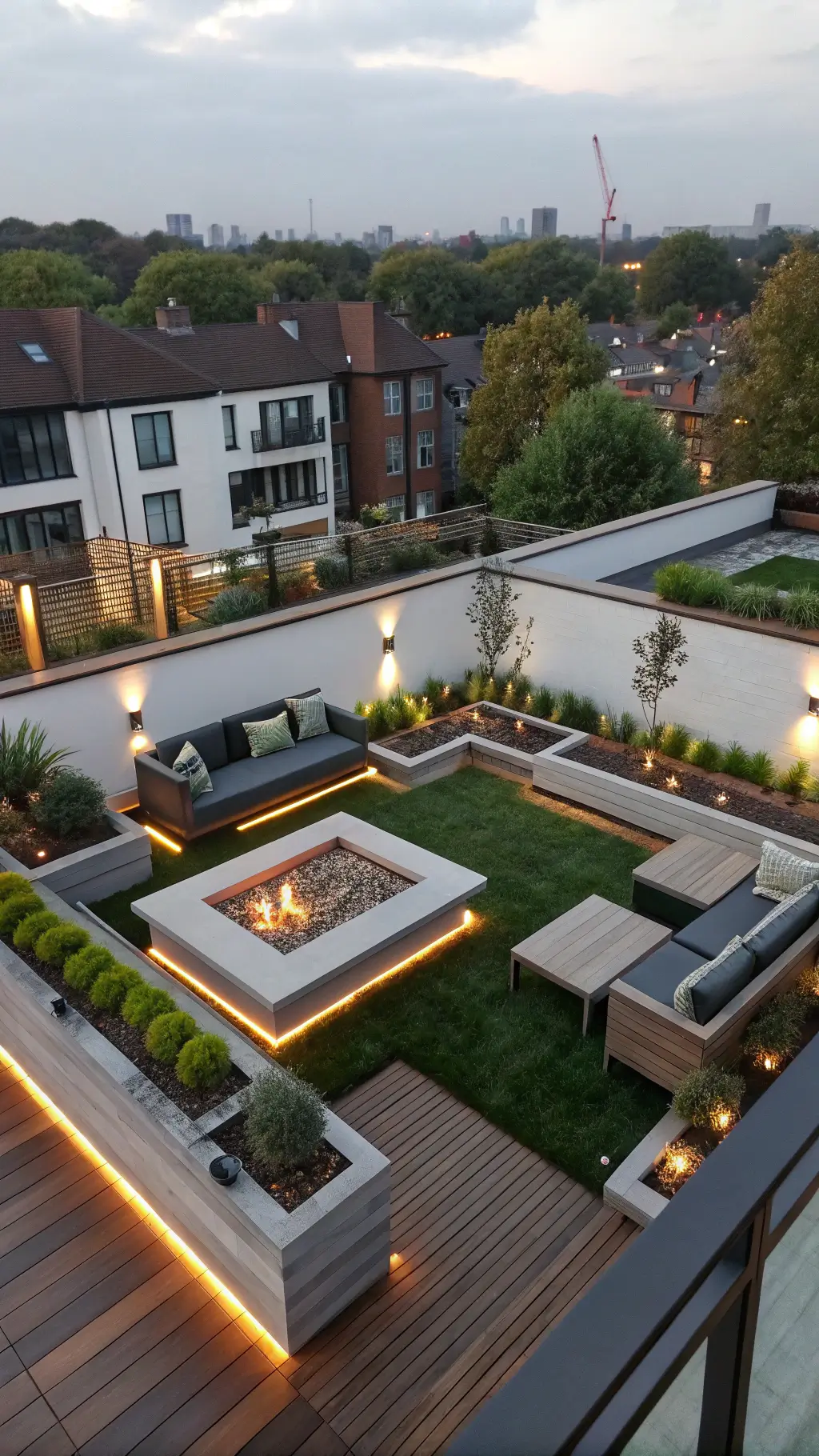
💡 Steal This Look
- Paint Color: Farrow & Ball French Gray 18
- Furniture: low-profile modular outdoor sofa in weathered teak or powder-coated aluminum with Sunbrella cushions in charcoal or slate
- Lighting: bollard LED path lights with geometric rectangular housings in matte black or corten steel finish
- Materials: polished concrete, honed bluestone, corten steel planters, linear ipe decking, river rock drainage beds
There’s something deeply satisfying about a garden that feels edited rather than accumulated—every piece earns its place through function and form, and the negative space between elements becomes as intentional as the features themselves.
Pro Styling Techniques
Texture and Contrast are Your Friends
Layering Like a Design Pro
- Pair smooth concrete with rough timber
- Mix fine grasses with bold succulents
- Create visual depth through strategic material selection
Planting Strategy
Choose Plants Wisely
- Native grasses
- Architectural plants
- Pollinator-friendly flowers
- Low-maintenance perennials
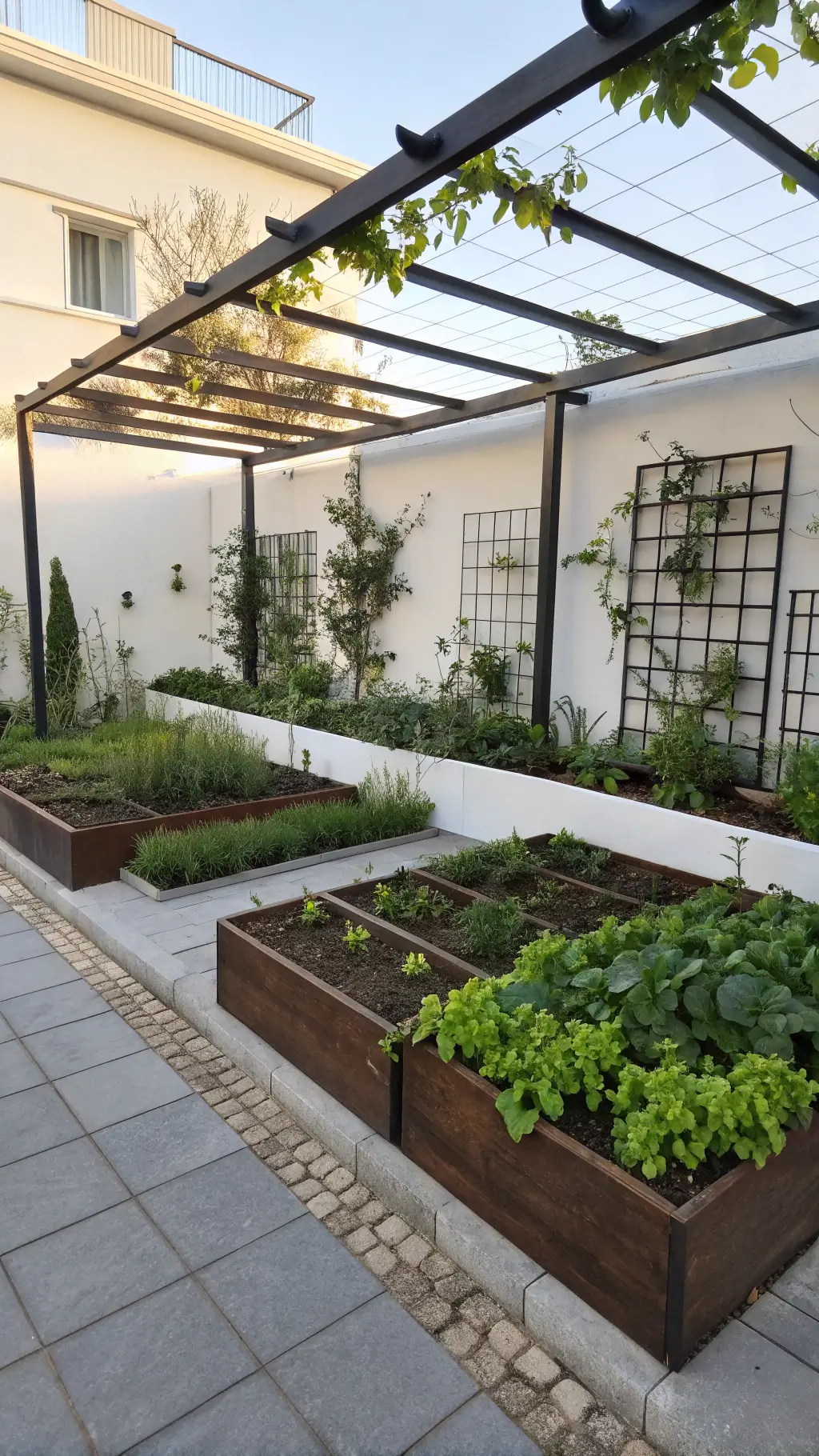
✎ Steal This Look
- Paint Color: Behr Back to Nature S340-4
- Furniture: weathered teak lounge chairs with charcoal Sunbrella cushions, concrete fire pit table with gas insert
- Lighting: bollard LED pathway lights in matte black finish, string lights with Edison bulbs draped between pergola beams
- Materials: board-formed concrete retaining walls, FSC-certified ipe decking, corten steel planters, river rock drainage beds, hemp rope accents
This is where your garden stops looking like a collection of plants and starts feeling like an intentional room—layering textures here is what makes guests pause and actually notice the space you’ve built.
Budget-Friendly Implementation
DIY Tips for Every Skill Level
- Start small with container gardens
- Invest in 2-3 statement pieces
- Use repetition for visual impact
- Shop end-of-season sales for furniture
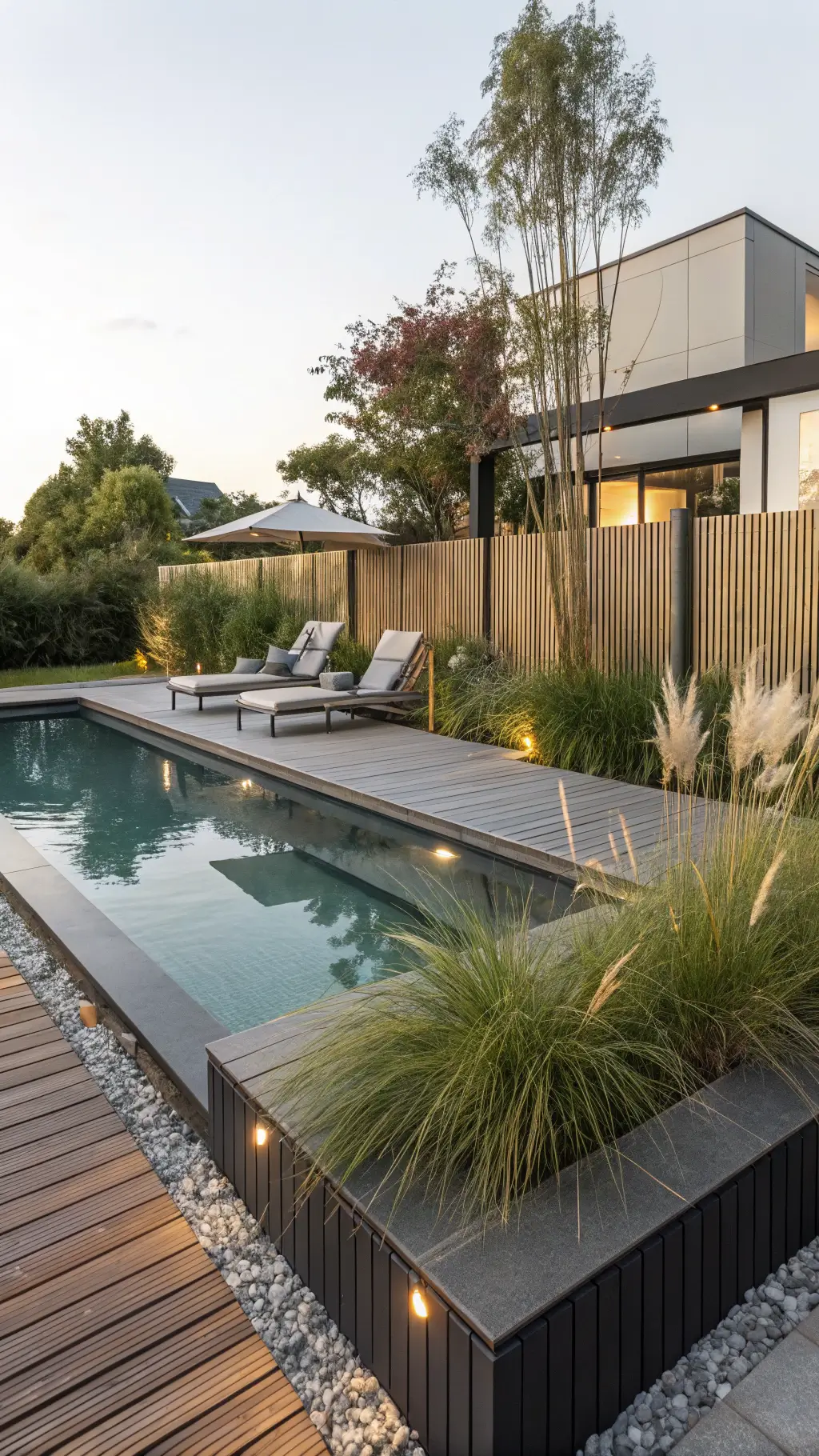
🖼 Steal This Look
- Paint Color: Valspar Garden Glade 5007-5C
- Furniture: weathered teak Adirondack chair with slatted back
- Lighting: solar-powered rattan pendant with warm white LED
- Materials: concrete planters, reclaimed wood decking, galvanized steel accents
This is where your garden becomes truly yours—those weekend projects that start with a $20 bag of potting soil and end with something you built with your own hands, imperfect and alive.
Maintenance Made Easy
Keep It Simple
- Choose drought-resistant plants
- Install efficient irrigation
- Use mulch to reduce weeding
- Select furniture with weather-resistant materials
★ Steal This Look
- Paint Color: PPG Olive Grove PPG1125-6
- Furniture: powder-coated aluminum lounge set with quick-dry foam cushions
- Lighting: solar-powered LED bollard lights with dusk-to-dawn sensors
- Materials: composite decking, corten steel planters, porcelain pavers, recycled plastic lumber
A low-maintenance garden isn’t about sacrificing beauty—it’s about designing smarter so you actually spend time enjoying your space instead of wrestling with it every weekend.
Seasonal Refresh Strategies
Quick Update Techniques
- Swap outdoor cushions
- Rearrange potted plants
- Add subtle lighting
- Introduce new accent pieces
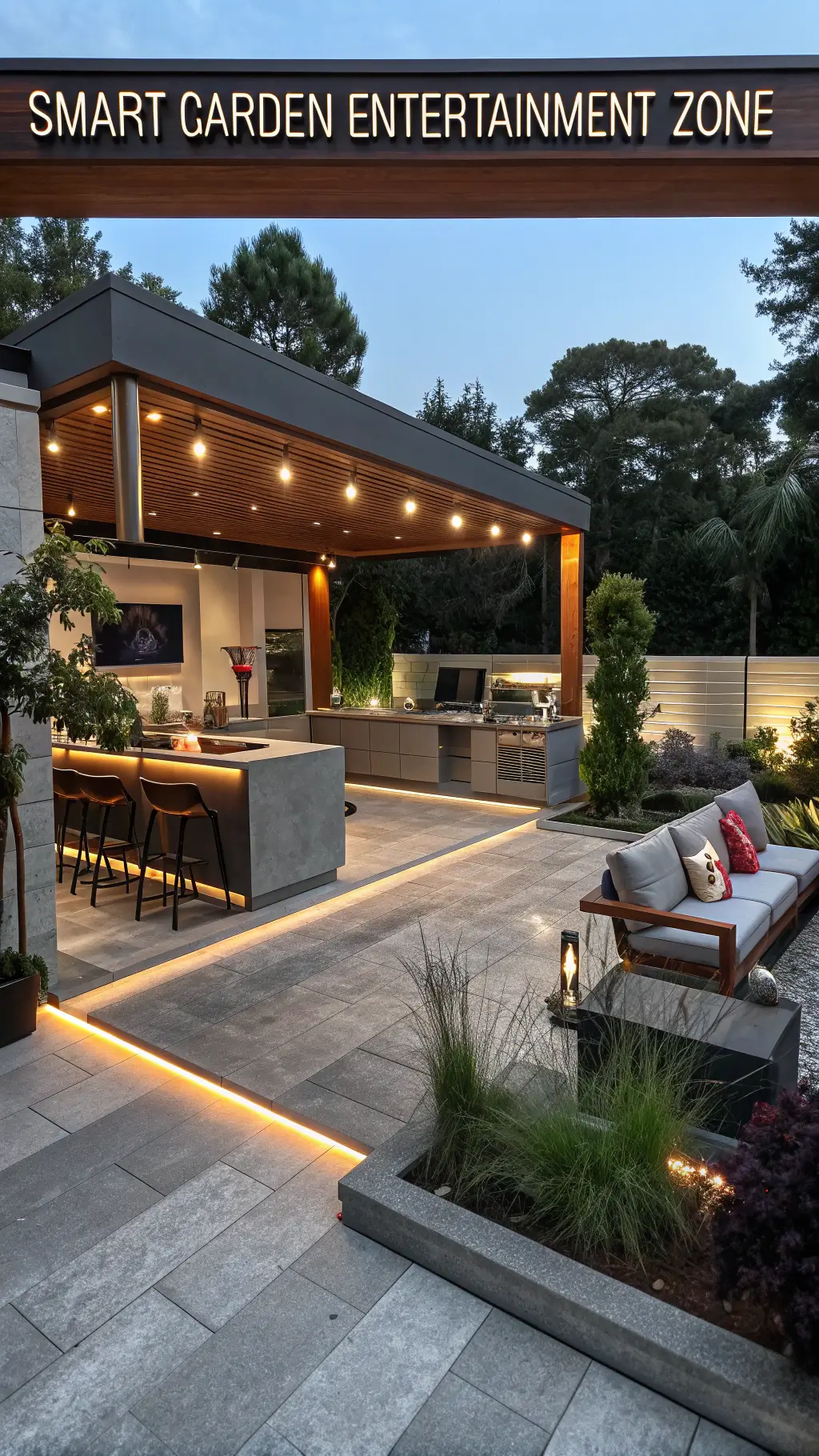
★ Steal This Look
- Paint Color: Dunn-Edwards Whisper DEW340
- Furniture: modular outdoor sectional with weather-resistant teak frames and quick-dry foam cushions in charcoal or slate
- Lighting: solar-powered bollard lights with warm 2700K LED output and powder-coated aluminum housings
- Materials: powder-coated aluminum, FSC-certified teak, solution-dyed acrylic fabrics, textured concrete planters, and natural fiber outdoor rugs
A modern garden should feel alive and responsive, not static—think of it as your outdoor wardrobe, where a few strategic changes keep the space feeling intentional and current without constant overhauls.
Budget Breakdown
Cost Expectations
- DIY refresh: $200-$500
- Mid-range makeover: $1,000-$3,000
- Professional design: $5,000-$15,000
Final Thoughts
Modern garden design in 2025 is about creating a personal sanctuary that’s beautiful, functional, and kind to the environment. It’s not about perfection – it’s about creating a space that feels authentically you.
Your Garden, Your Rules
Remember: These are guidelines, not strict commandments. Your outdoor space should reflect your personality, lifestyle, and how you want to live.
Pro Tip: Take photos of your progress. Not only will you see how far you’ve come, but you’ll also have amazing content to share with friends and on social media.
Quick Start Checklist
- Measure your space
- Sketch a basic layout
- Choose your color palette
- Select 3-5 key plants
- Pick your hero furniture piece
- Start implementing!
Happy gardening, design lovers! Your outdoor oasis awaits.